Local is why we do this. MLX is how we do it.
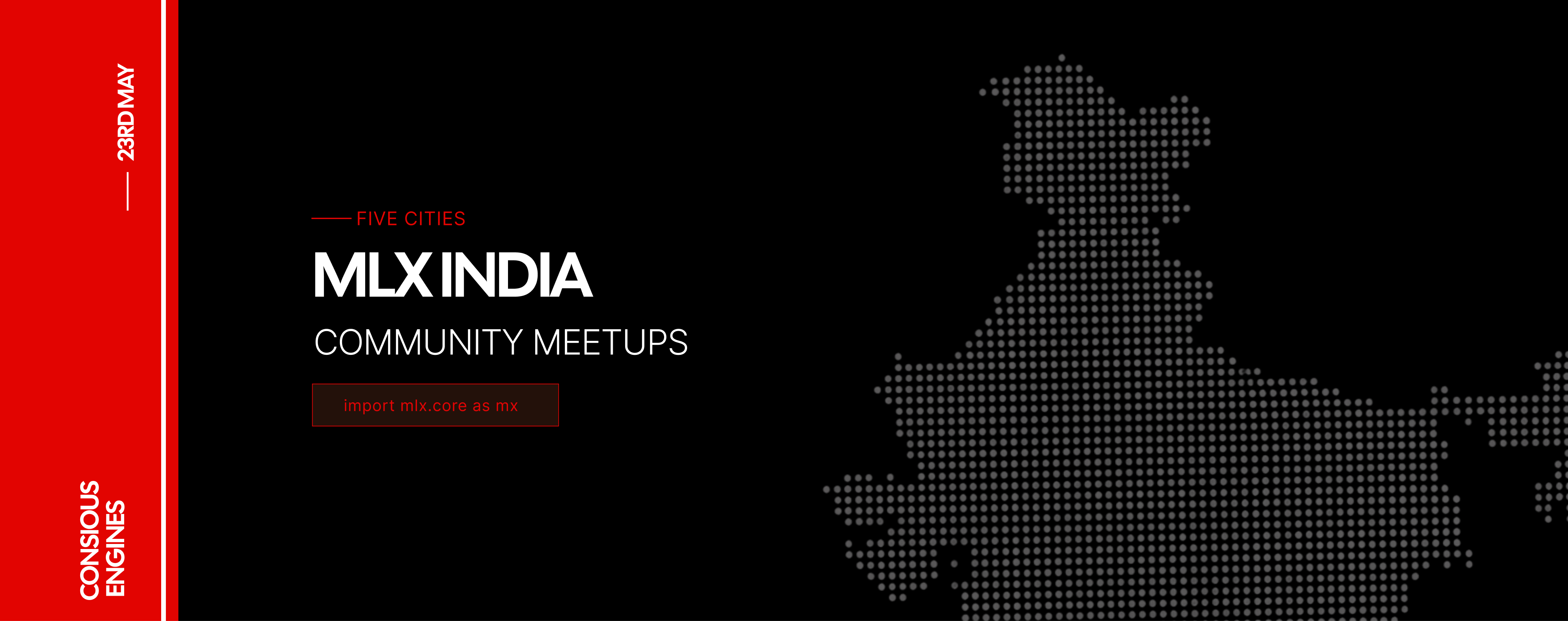
Five cities, one afternoon, and a bet on local AI - MLX India's second community meetup ran simultaneously across Chennai, Bangalore, Mumbai, Delhi, and Hyderabad.
1st June 2026
There's a quiet shift happening in how builders think about AI. For most of the last few years, using AI meant renting it - an API key, a per-token bill, and your data making a round trip to someone else's servers and back before you ever saw an answer. We think the more interesting version runs somewhere else entirely: on the machine already sitting on your desk.
That's the bet behind MLX India - a community of builders running local AI models on their own hardware. Local is why we do this. MLX is how we do it on Apple Silicon. Models that live on your device are private by default, don't bill you by the token, keep running with the Wi-Fi off, and answer back without a network hop in the loop. The catch has always been that making a model actually run well on a laptop - fast, quantized, memory-sane - is harder than calling an endpoint. MLX is the thing that closes that gap on Apple hardware, which happens to be the hardware most builders in India already own.
The idea is catching. Since our last meetup, the community went from around 300 members to 700+ - builders shipping, benchmarking, and showing their work week after week. So this time, instead of picking a city, we picked five.
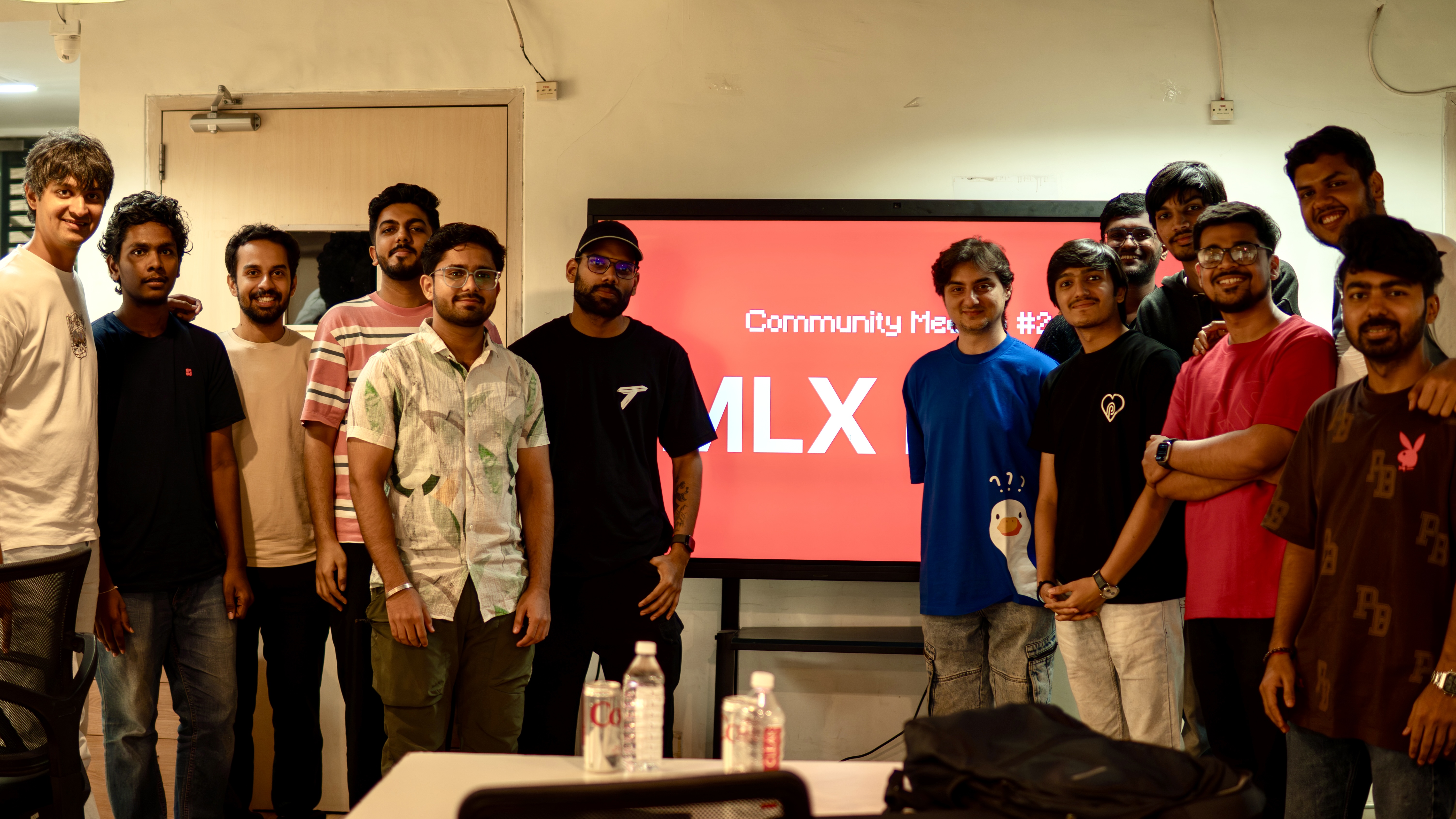
On May 23, 2026, we ran our second MLX India Community Meetup across Chennai, Bangalore, Mumbai, Delhi, and Hyderabad - same day, same timings, one banner. Over 100 builders showed up across the five rooms, and more than half of them were running a model locally for the first time. Here's how the day went.
Five cities, one afternoon
Five rooms, in five cities, moving in lockstep - talks, a hands-on build session, and demos, all running in parallel across the country at the same time. While someone in Chennai was fine-tuning a model, someone in Delhi was pushing one to sustained load, and someone in Mumbai was watching tokens stream off their own GPU for the first time. Same afternoon. No cloud in the picture.
The reason we spread it this wide is simple. Local, private, sovereign AI shouldn't be a thing you read about - it should be something you've run with your own hands. The fastest way to make a hundred more people believe that is to put a hundred laptops in five rooms and let them watch it work.
Talks
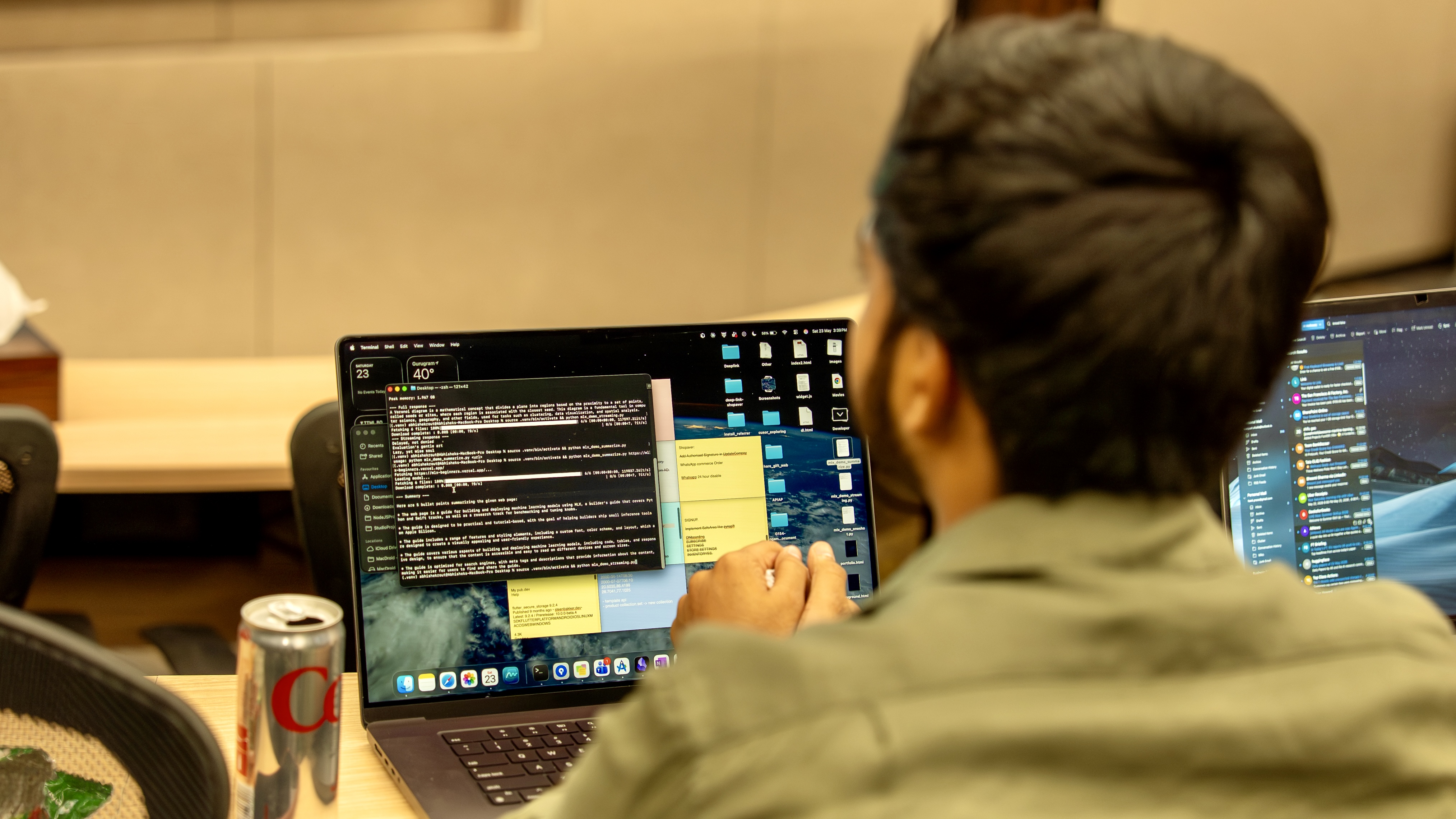
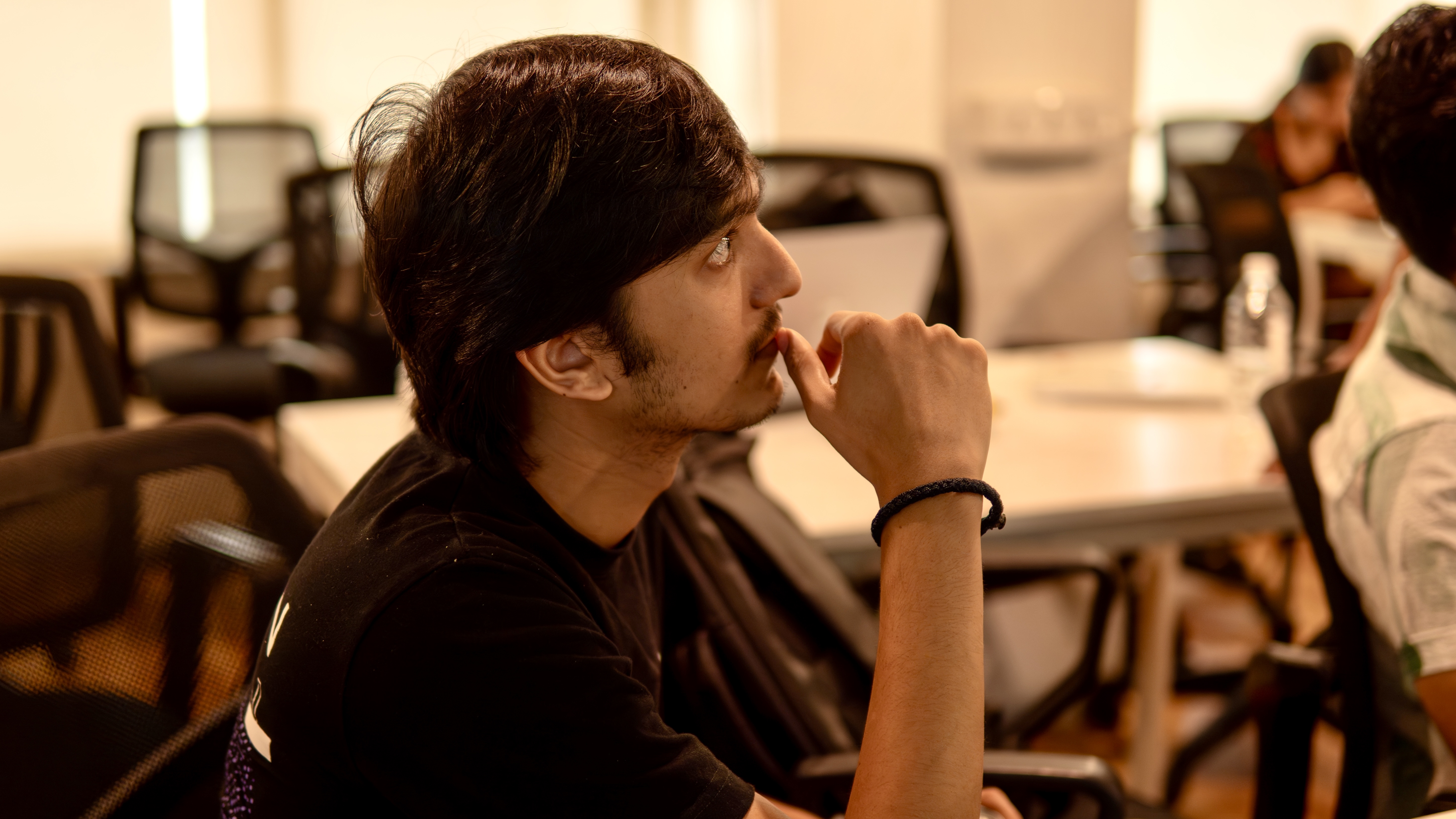
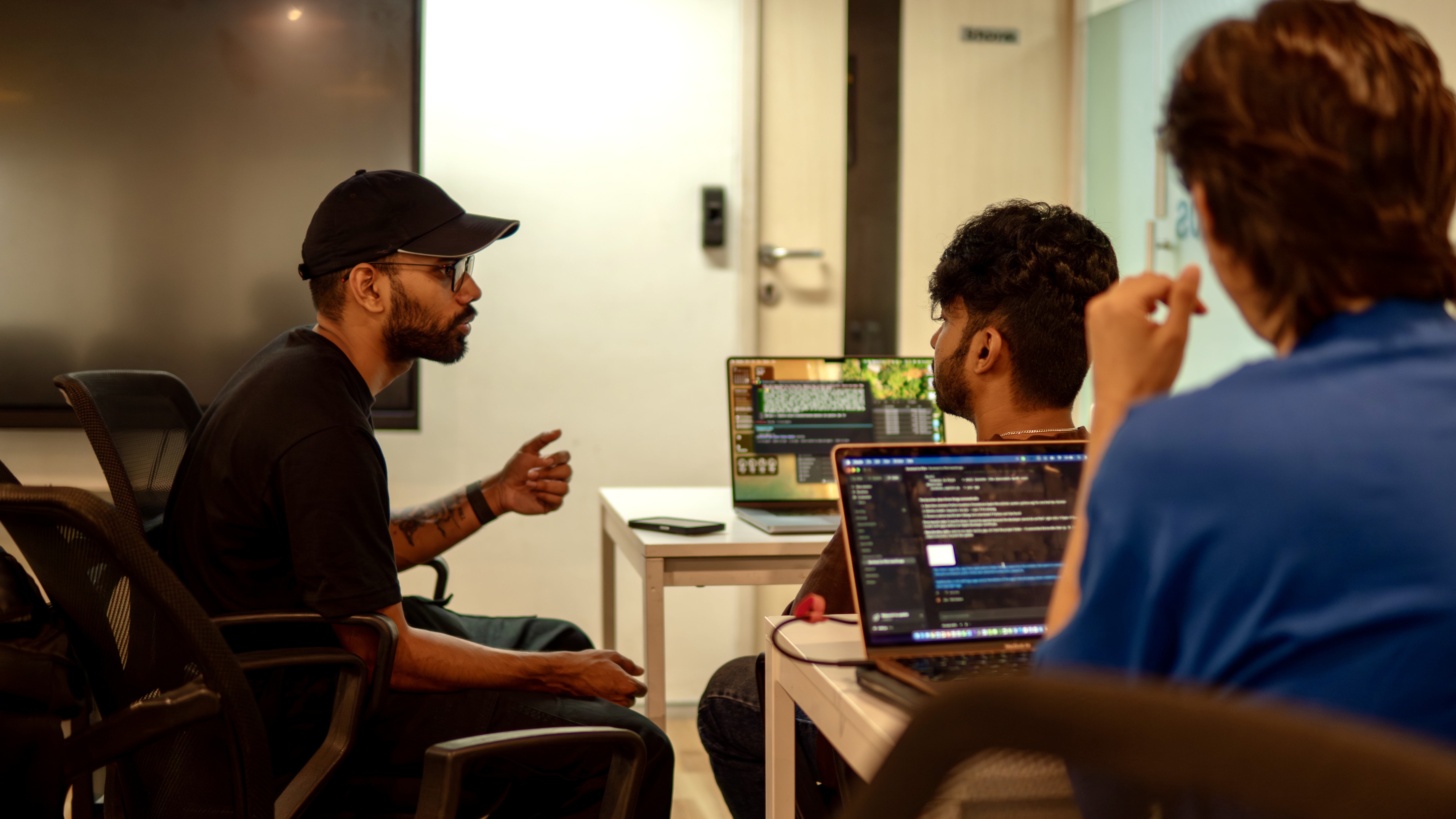
Nine speakers across the five cities carried the lineup, and between them they covered just about every layer of the local stack - from the fundamentals of running a model on-device, to squeezing performance out of the hardware, to the research-side work of quantization and fine-tuning that makes small local models genuinely usable. Q&A stayed active throughout, and the discussion held its edge across every session.
Chennai
- Prabakaran Marimuthu - Intro to Physical AI with MLX (Watch Video)
- Sabesh Bharathi - Fine-tuning models using MLX (Watch Video)
Bangalore
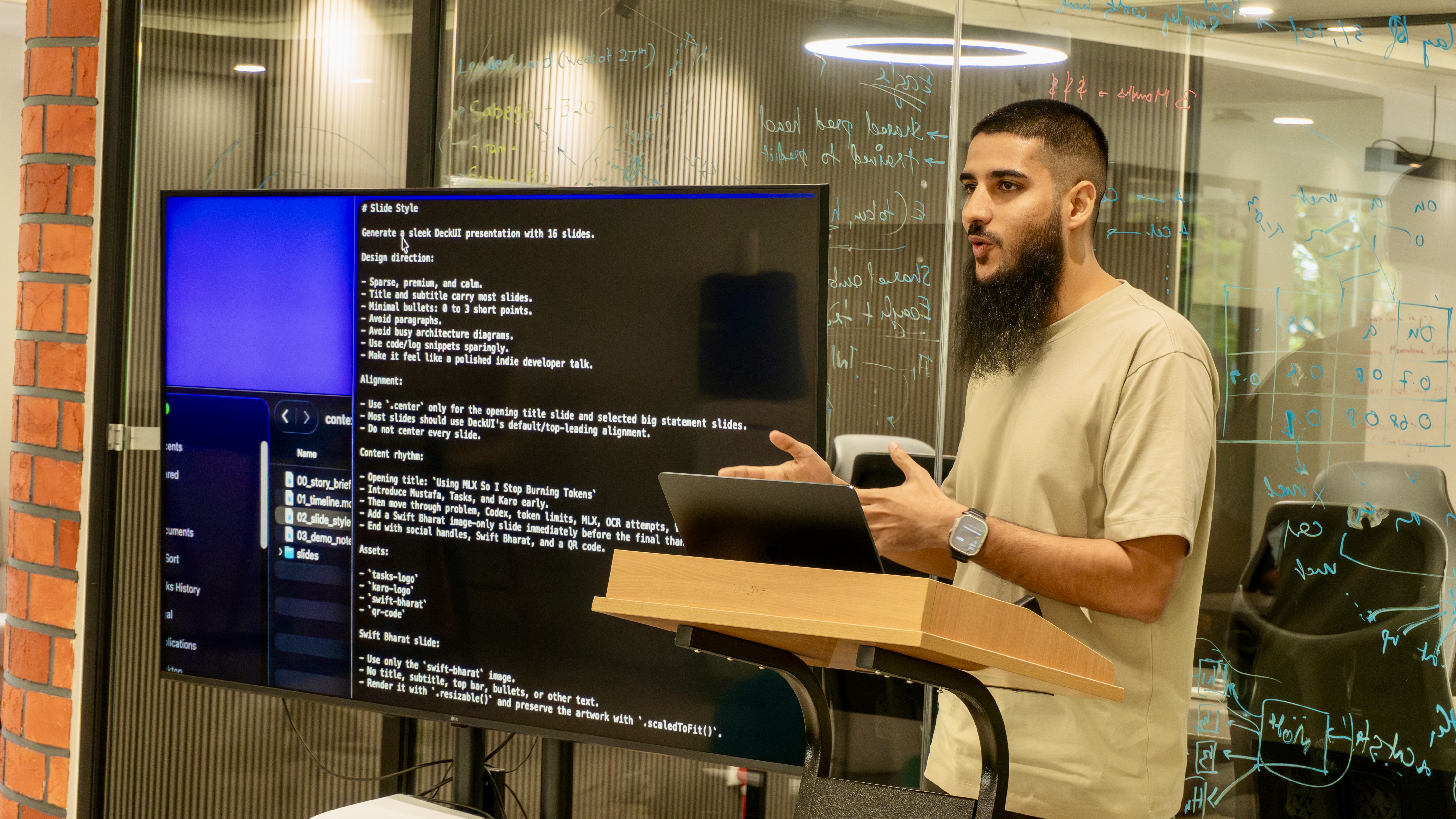
- Mustafa Yusuf - How I use MLX to reduce token burn (Watch Video)
- Sahil AK - Tool calling with MLX Swift (Watch Video)
Mumbai
- Ankesh Bharti - Own Your AI (Watch Video)
- Kautuk Kundan - Speculative Decoding using MLX
Delhi
- Pranay Tummalapalli - Sustained LLM Inference on Edge Devices (Watch Video)
- Sagar Yadav - Building with MLX-Audio (Watch Video)
Hyderabad
- Shahir M.A. - Using ANE for ML Workloads
The throughline across all nine wasn't the framework - it was the shift in posture. Own Your AI. Reduce token burn. Run it on the edge. Different talks, same underlying argument: the model should belong to you, and run where you are.
Build Session
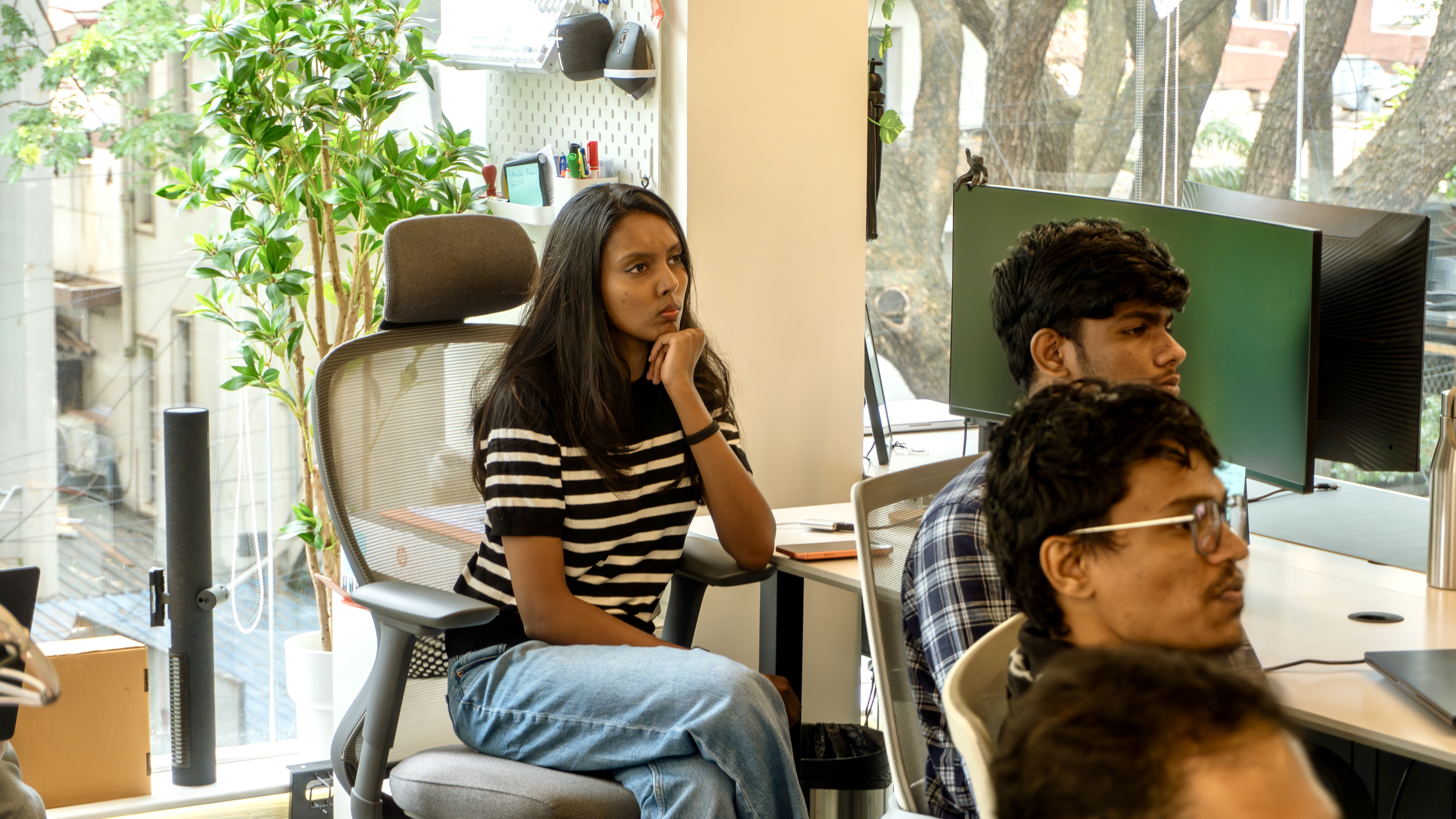
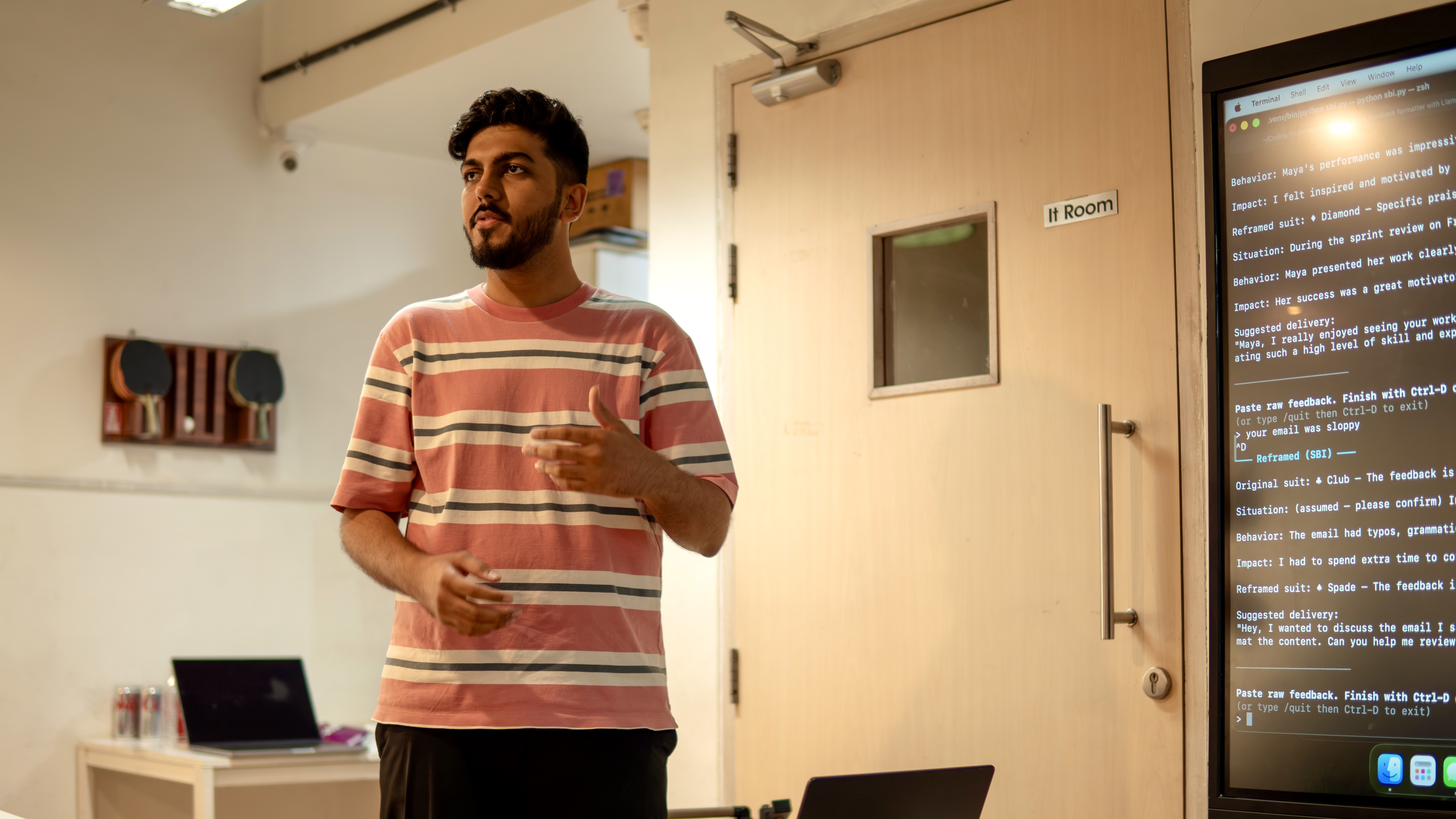
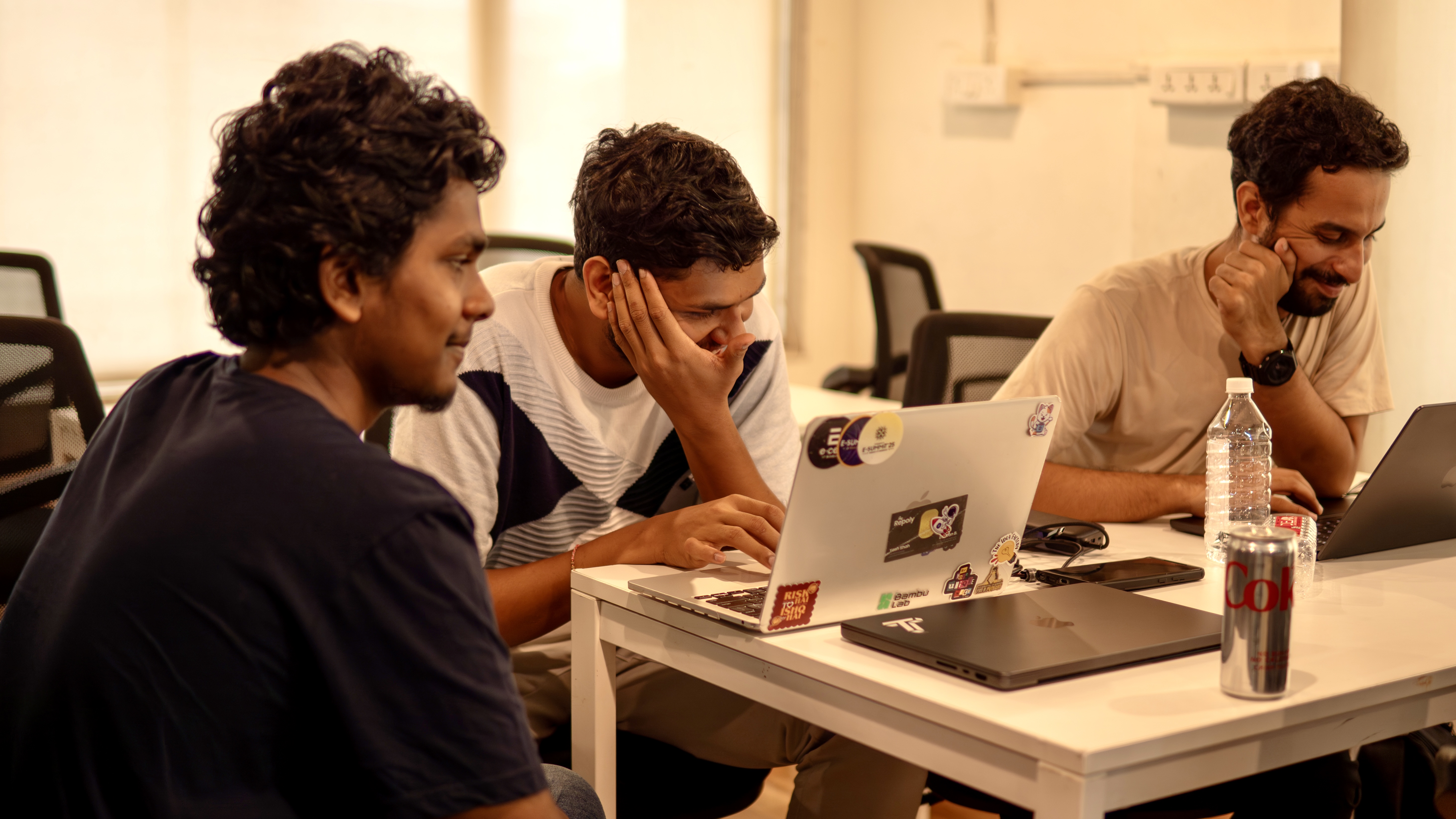
After the talks, every city moved into a build session. The brief was open, same as last time: build something local. An iOS or macOS app, a Python project on mlx-lm, or research work - benchmarking, quantization, fine-tuning. The only rule that mattered was that it ran on your machine.
The first-timers were the story again. More than half of every room had never run a model locally before - people who knew AI only as an API call, suddenly watching one load into memory and answer back on their own laptop, offline. That moment lands every time. It reframes the whole thing from a service you pay for to a tool you own.
And the room sorted itself out fast. App developers walked researchers through building a proper iOS app in Swift and respecting the HIG, so the model had somewhere real to live. Researchers walked app developers through picking the right model and the right techniques to pull actual performance out of Apple Silicon. Two halves of the same problem - how to run good models, and where to put them - teaching each other across the table.
Demos
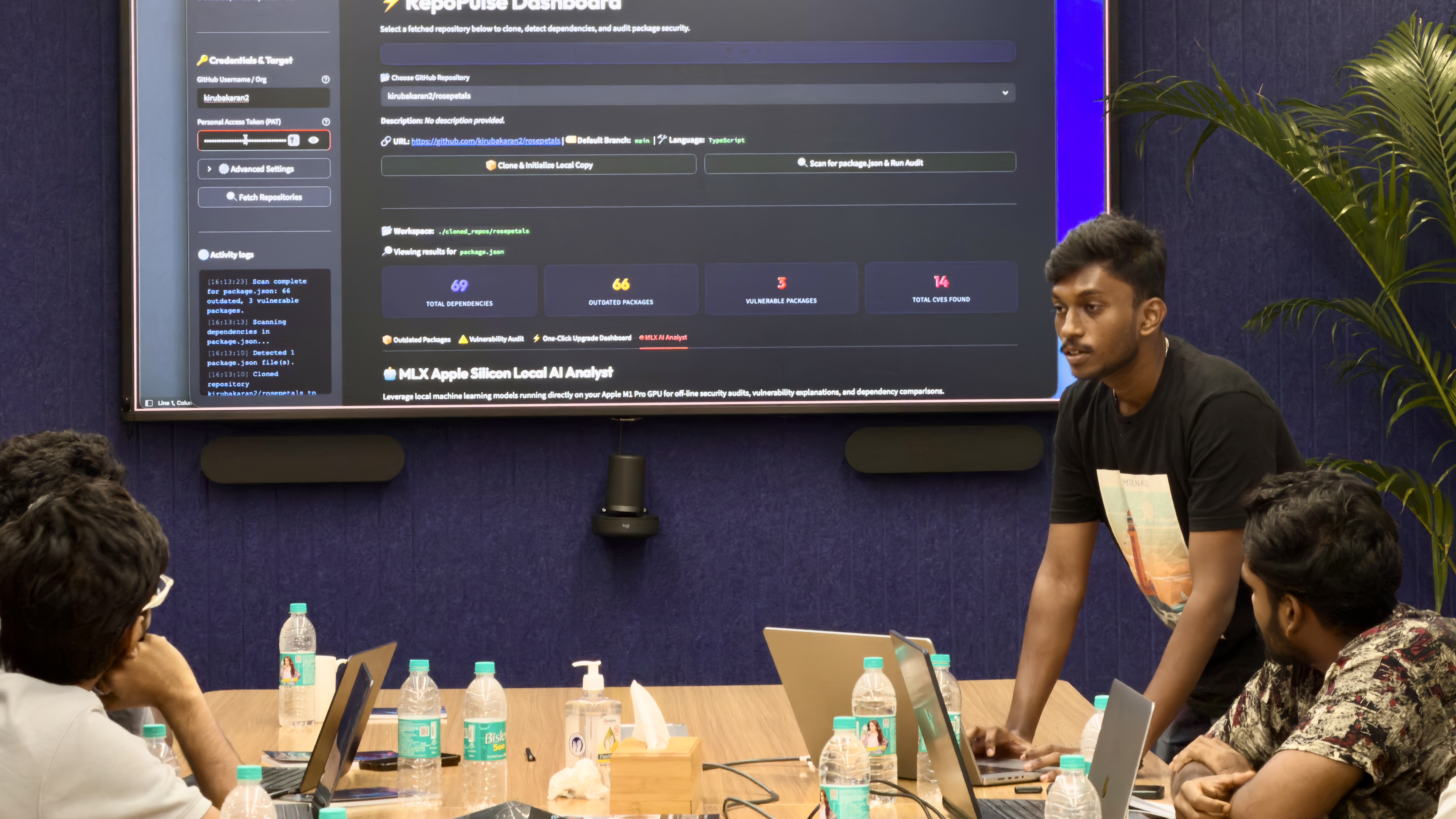
The top projects from each city were demoed to the room, and the bar was high again: iOS and macOS apps, custom models trained and fine-tuned on Apple Silicon, full TTS and STT pipelines, and apps making real use of tool calling and structured outputs. All of it running locally. None of it phoning home.
Watching first-time local-AI builders ship a working demo in a single afternoon - across five cities at once - was the clearest signal of the day. The barrier to running your own AI is lower than most people think. It just takes one afternoon and the right room to find that out.
Wrap
The day ended on those demos. Across five cities, everyone walked away with something new - a technique, a contact, or a project worth shipping. Running it simultaneously in Chennai, Bangalore, Mumbai, Delhi, and Hyderabad turned a single meetup into a national one.
We believe the future of AI is local - private, sovereign, and running on hardware you already own. On the Apple platforms, the way you get there is MLX. With 100+ builders, nine talks, and five rooms running at once, this was a clear win for local models, and for the framework that makes them fly on Apple Silicon.
If you've only ever rented your AI, come run your own. The next room is already filling up.
Delhi
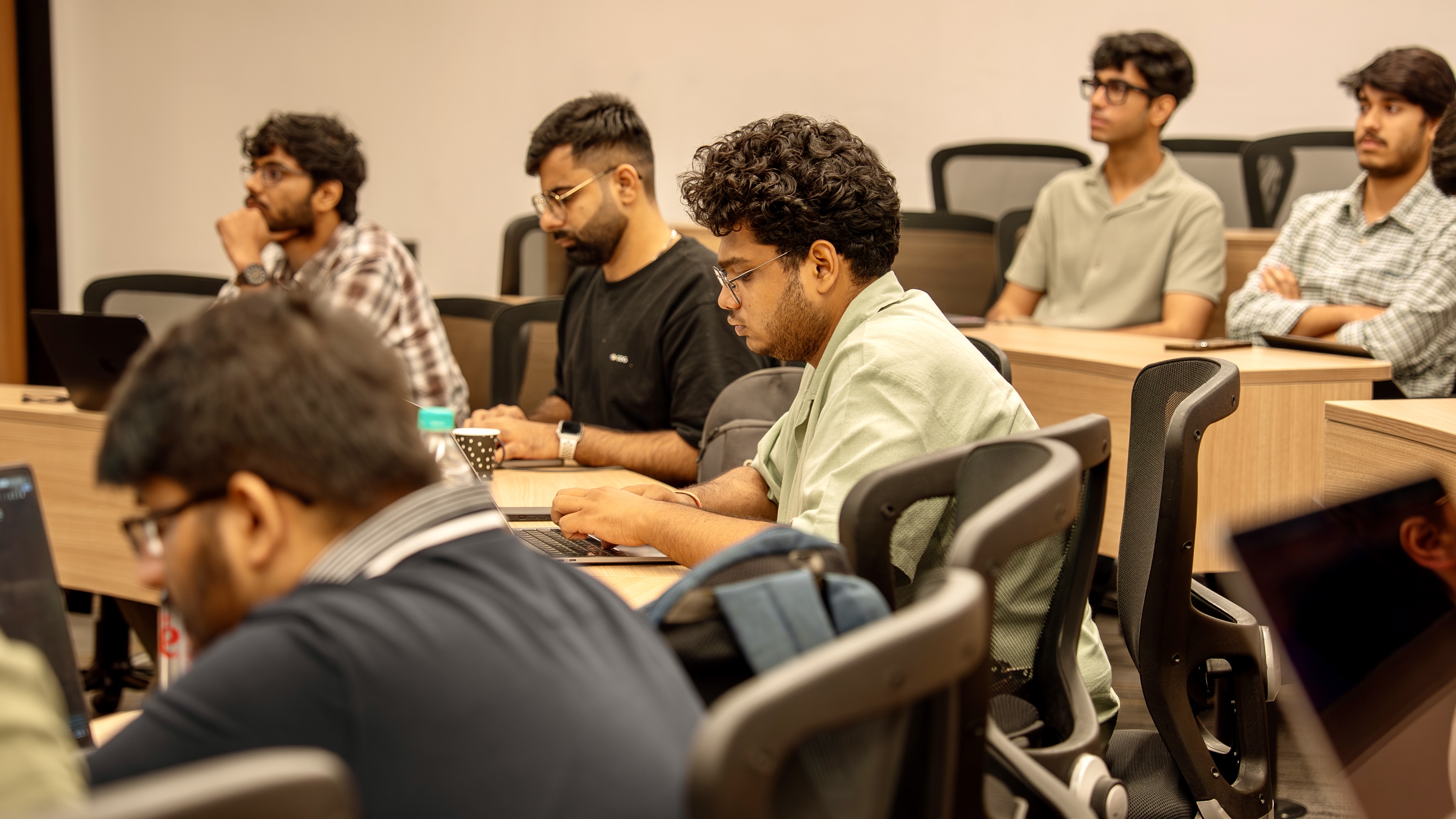
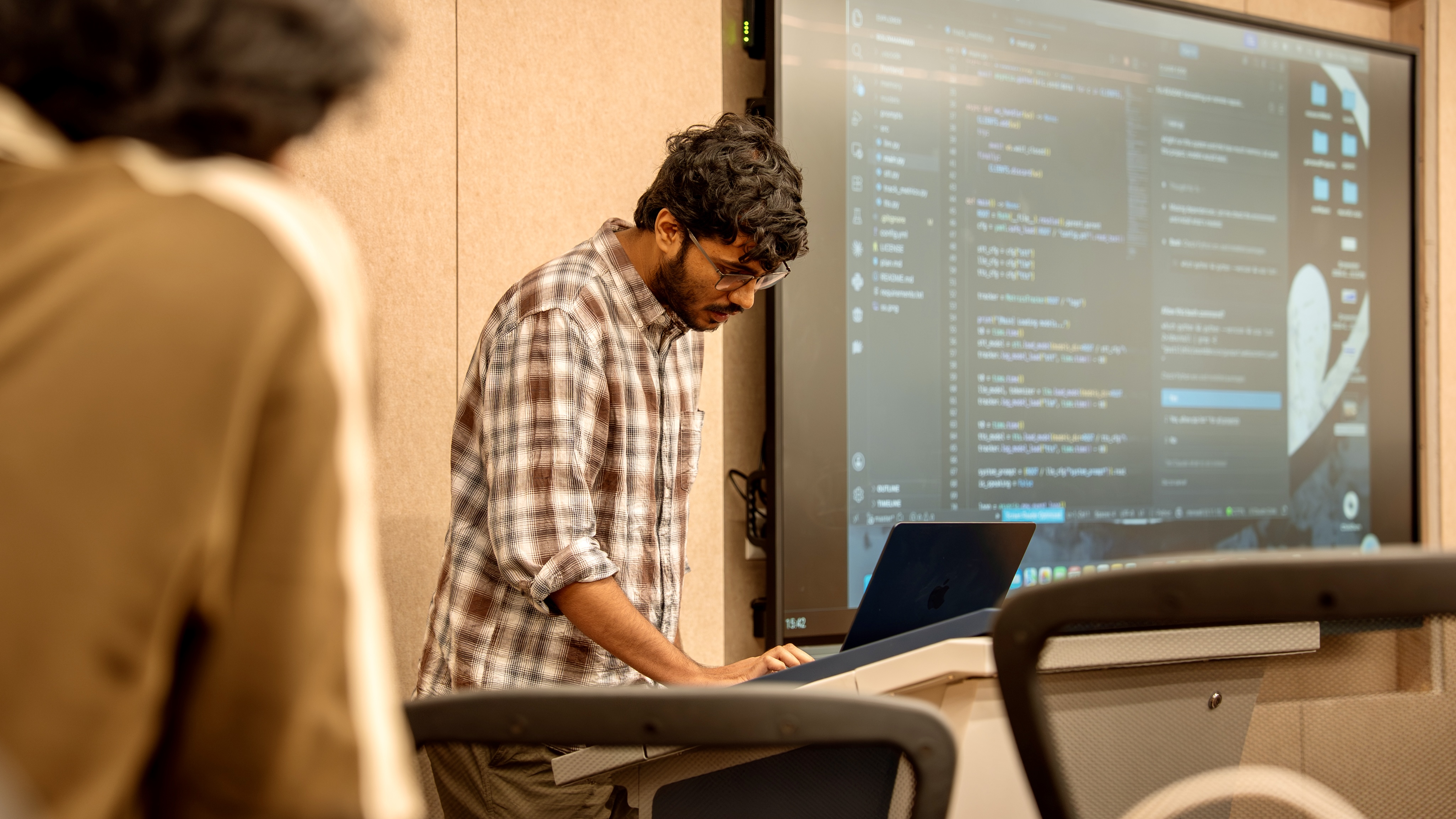
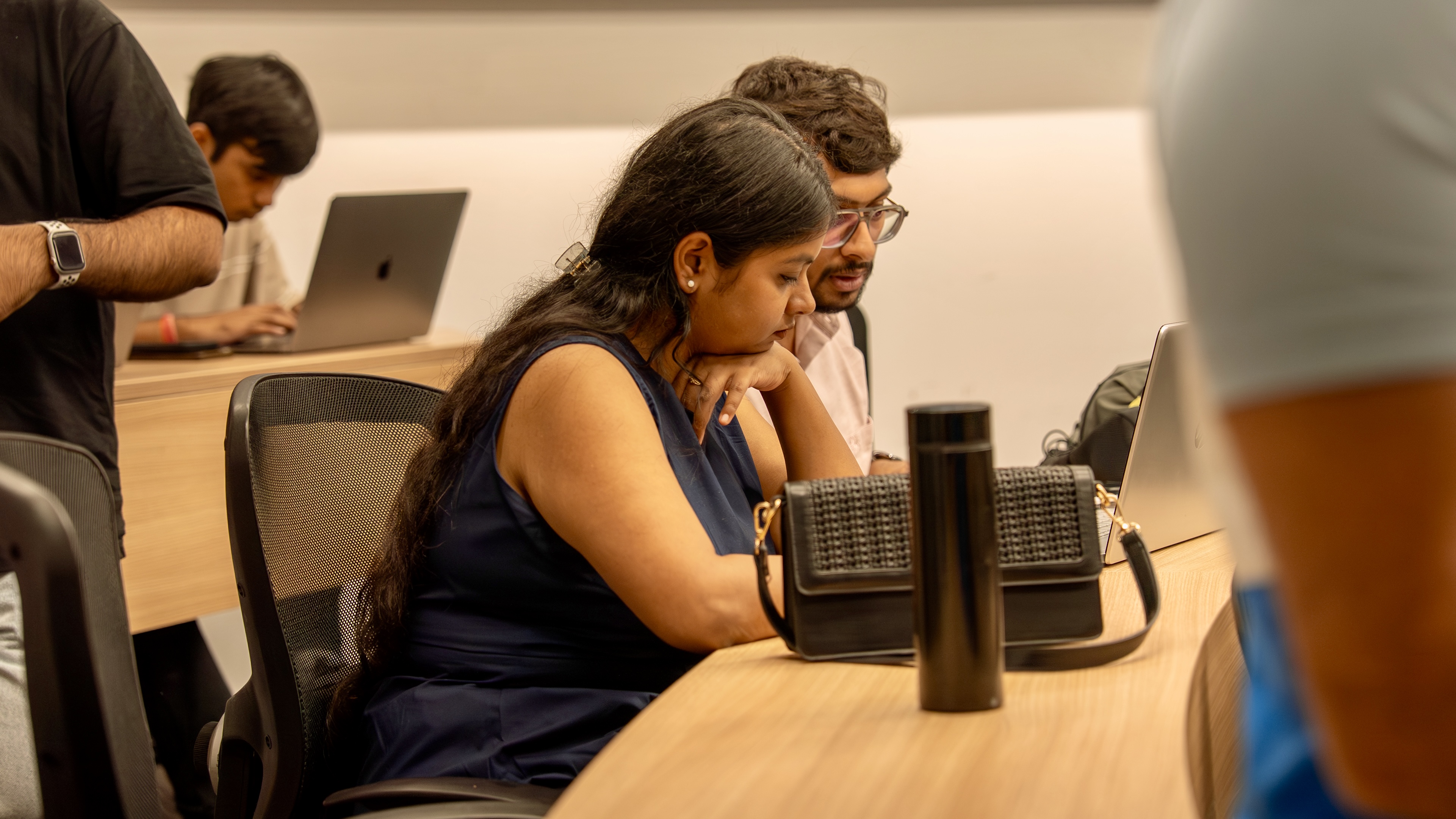
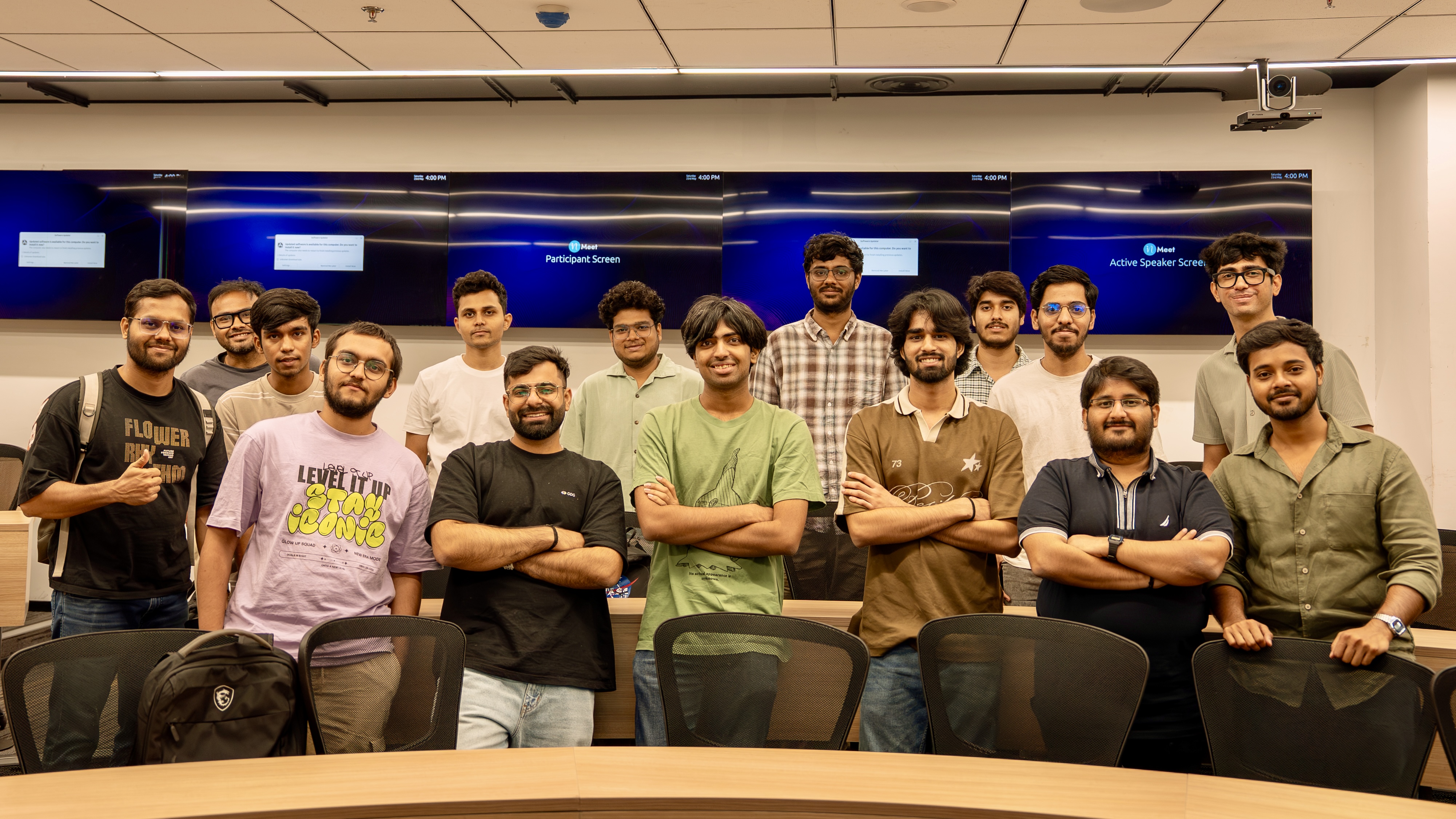
Delhi brought together some of the most committed builders we've seen so far. One friend group drove nearly three hours just to be part of the event. We also had attendees working at companies that supply data powering some of the world's leading frontier AI models, including some of your favorites you use daily.
| Builder | Demo |
|---|---|
| Shushobit | PDF voice assistant |
| Sarthak Jain | Hindi to Marwadi translation |
| Shrey | Summarizing agent |
| Manan | Realtime translation + voice cloning |
| Praduymn | KV cache — double context memory |
Mumbai
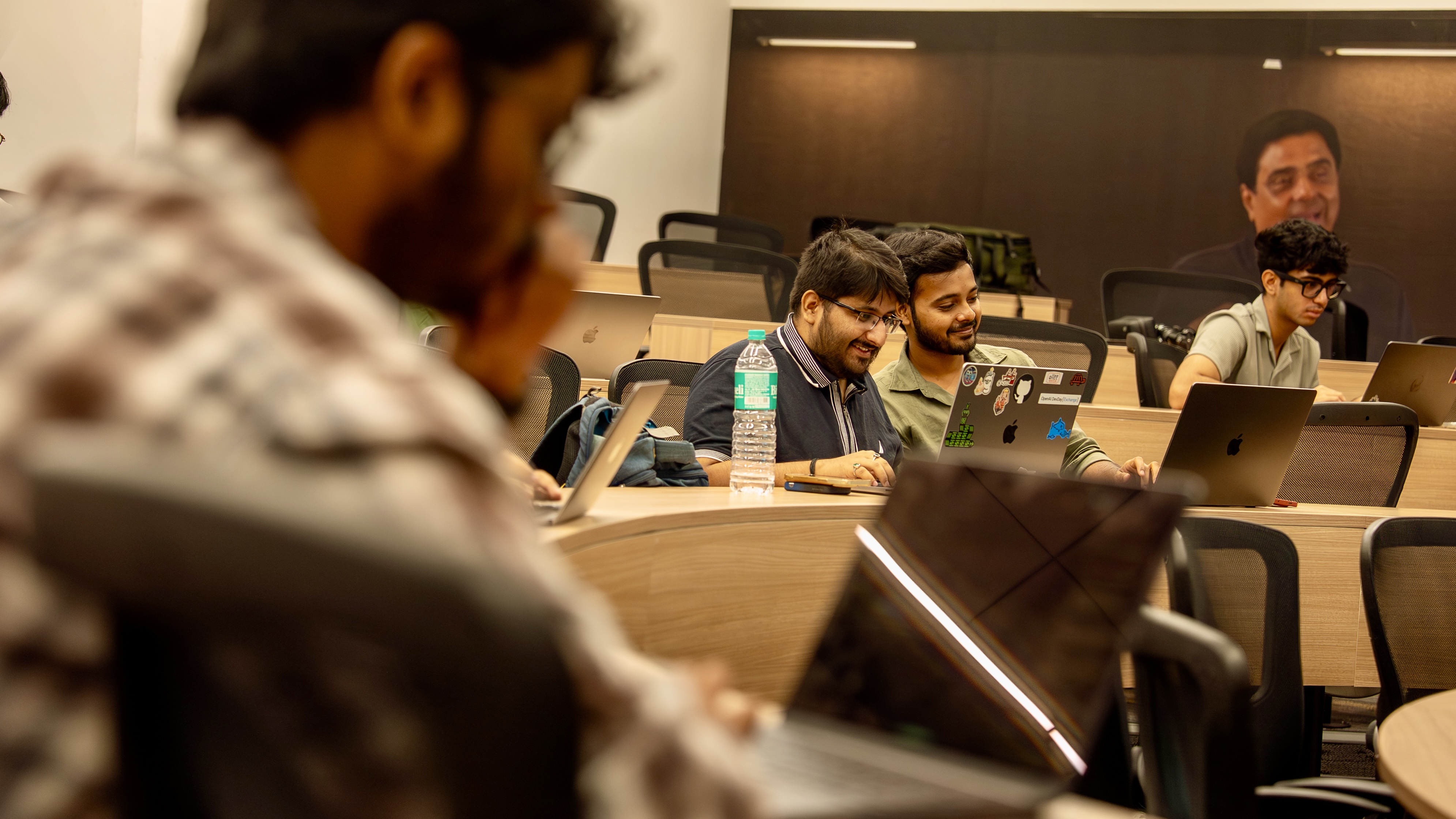
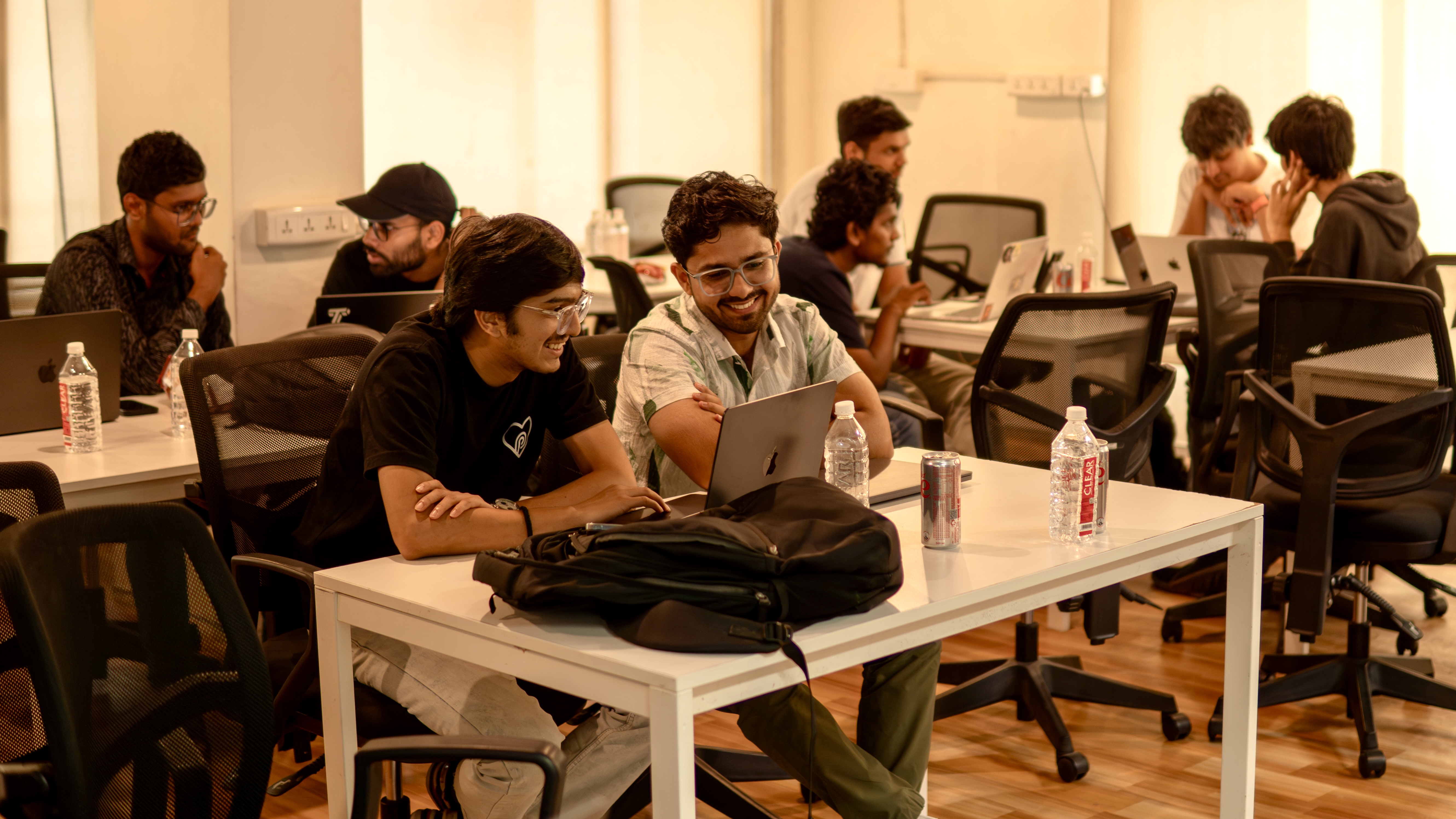
Mumbai attracted builders from across the region, with attendees traveling all the way from Pune to join the event. One of the most inspiring stories came from a 16-year-old developer who has already spent the last two years building iOS applications and is now diving headfirst into the world of MLX and AI.
| Builder | Demo |
|---|---|
| Soham | Tweet virality |
| Ankesh | Tool calling demo with local model |
| Adittya | Terminal copilot |
| Devendra, Parth | Web3 news feed |
| Aditya | Getting acquainted with MLX |
| Harpal | Feedback app |
| Ashish | On-device WisprFlow |
| Rishikesh | Model debate |
| Sahil | Local assistant for Google Workspace |
| Nishank | Tools for local agents |
Bangalore
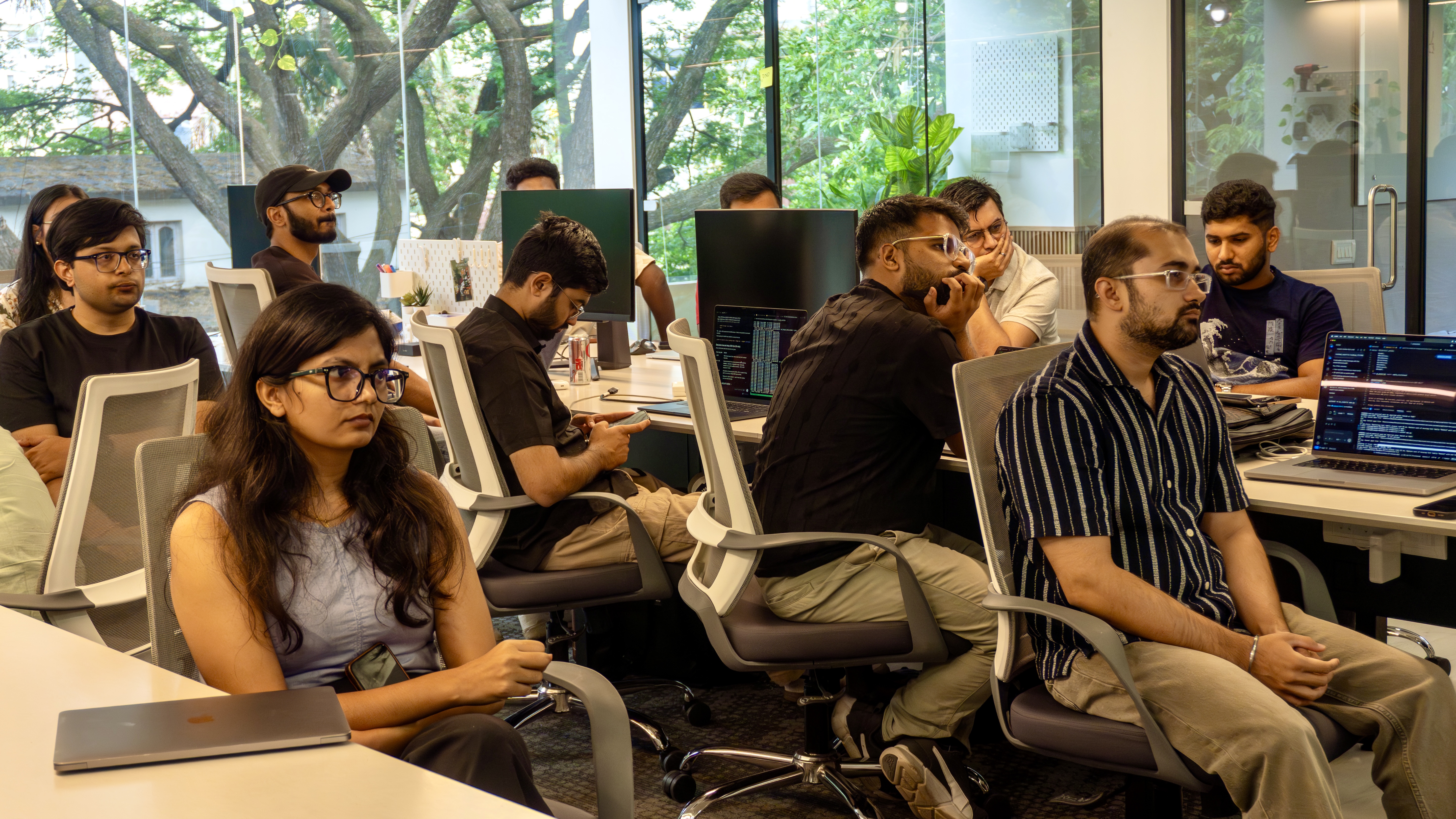
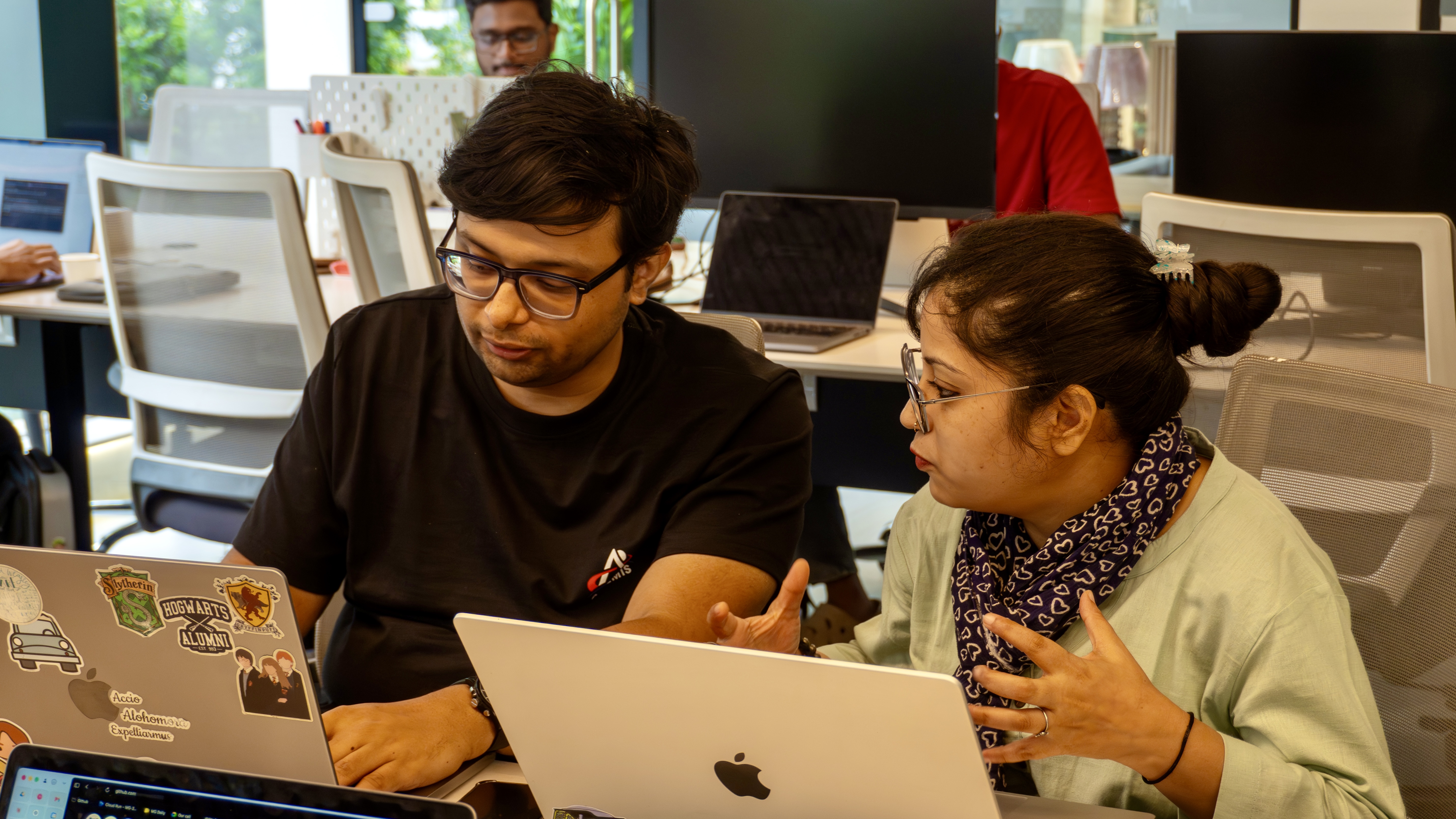
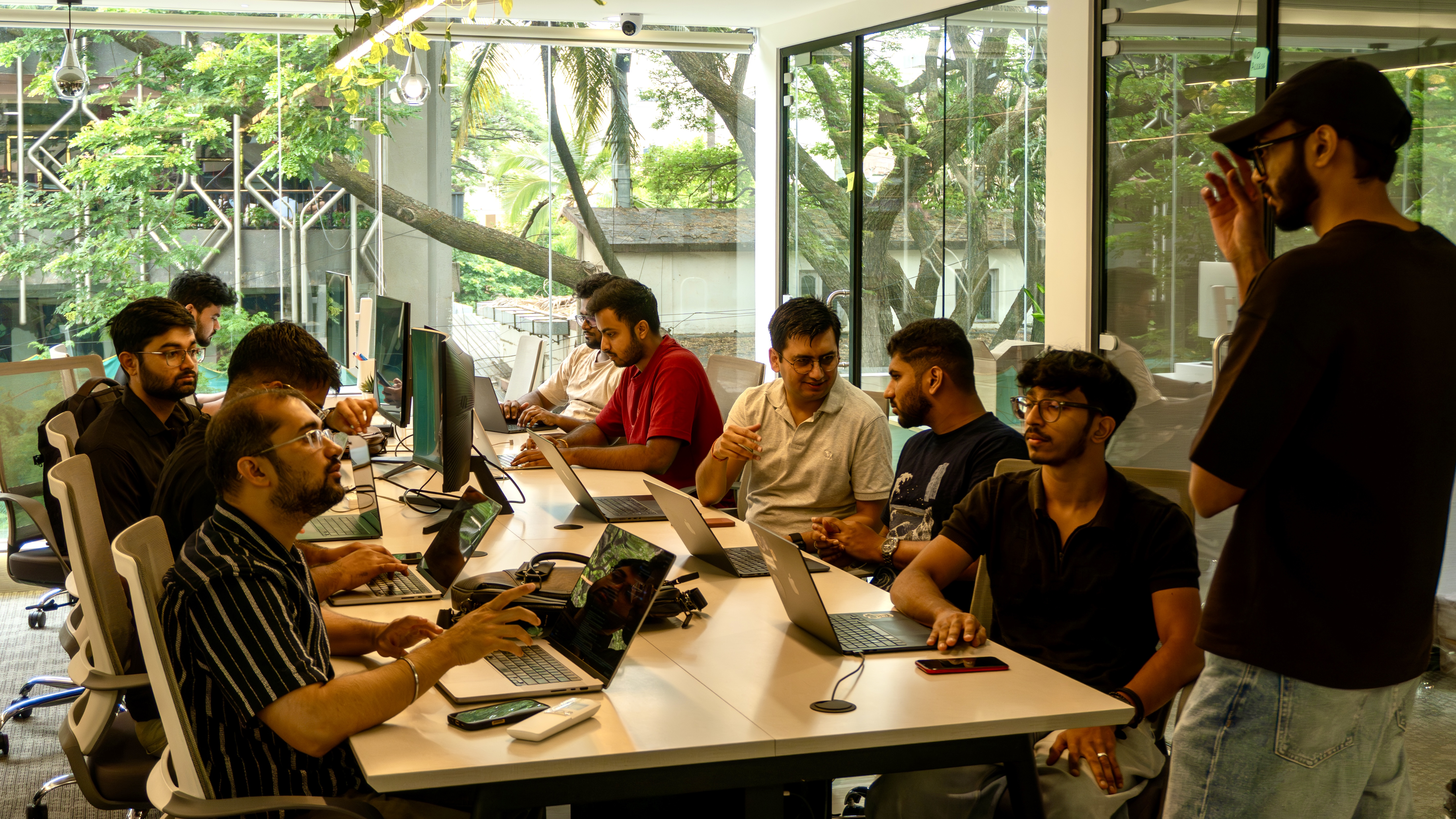
Bangalore was packed with an incredible mix of experience and experimentation. We had folks from Apple, developers with 16+ years of industry experience, and builders accelerating what's possible with MLX.
One attendee demoed a private AI DJ that plays your favorite tracks and seamlessly blends them into songs you're likely to discover and love next. A team of two built a PDF-to-Podcast, turning documents into engaging audio experiences. The wildest project came from a builder creating Strava for Builders.
| Builder | Demo |
|---|---|
| Abhijeet | Universal assistant |
| Pawan | Strava for builders |
| Samiksha | Image search |
| Yashwanthi | Private DJ |
| Samir | WisprFlow alternative |
| Sonam, Nishant | PDF/DOC to podcast |
| Hari | Microslap |
| Sagar | Music to deck |
| Videep | Productize an idea |
| Mithilesh | Kompact |
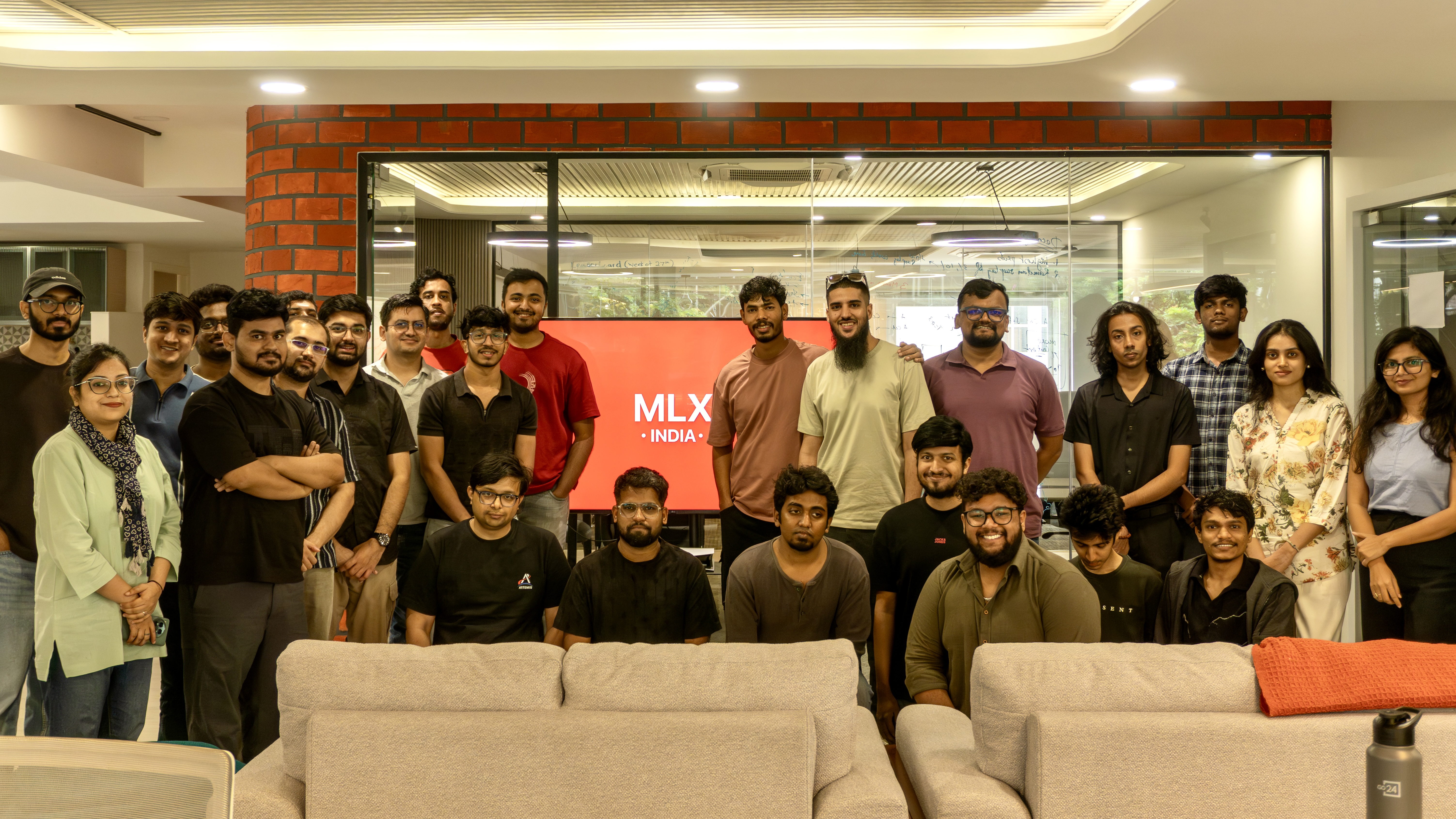
Chennai
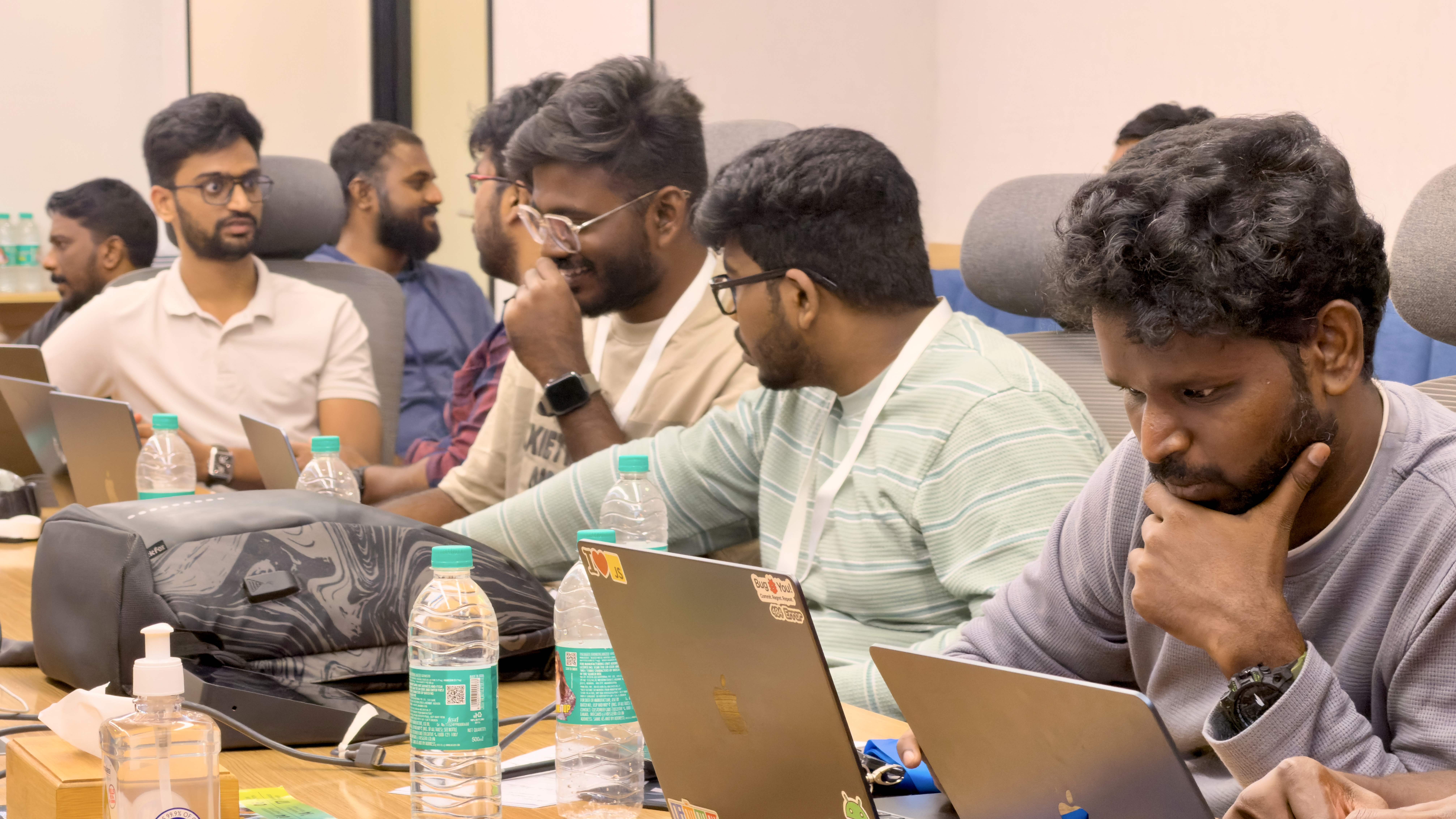
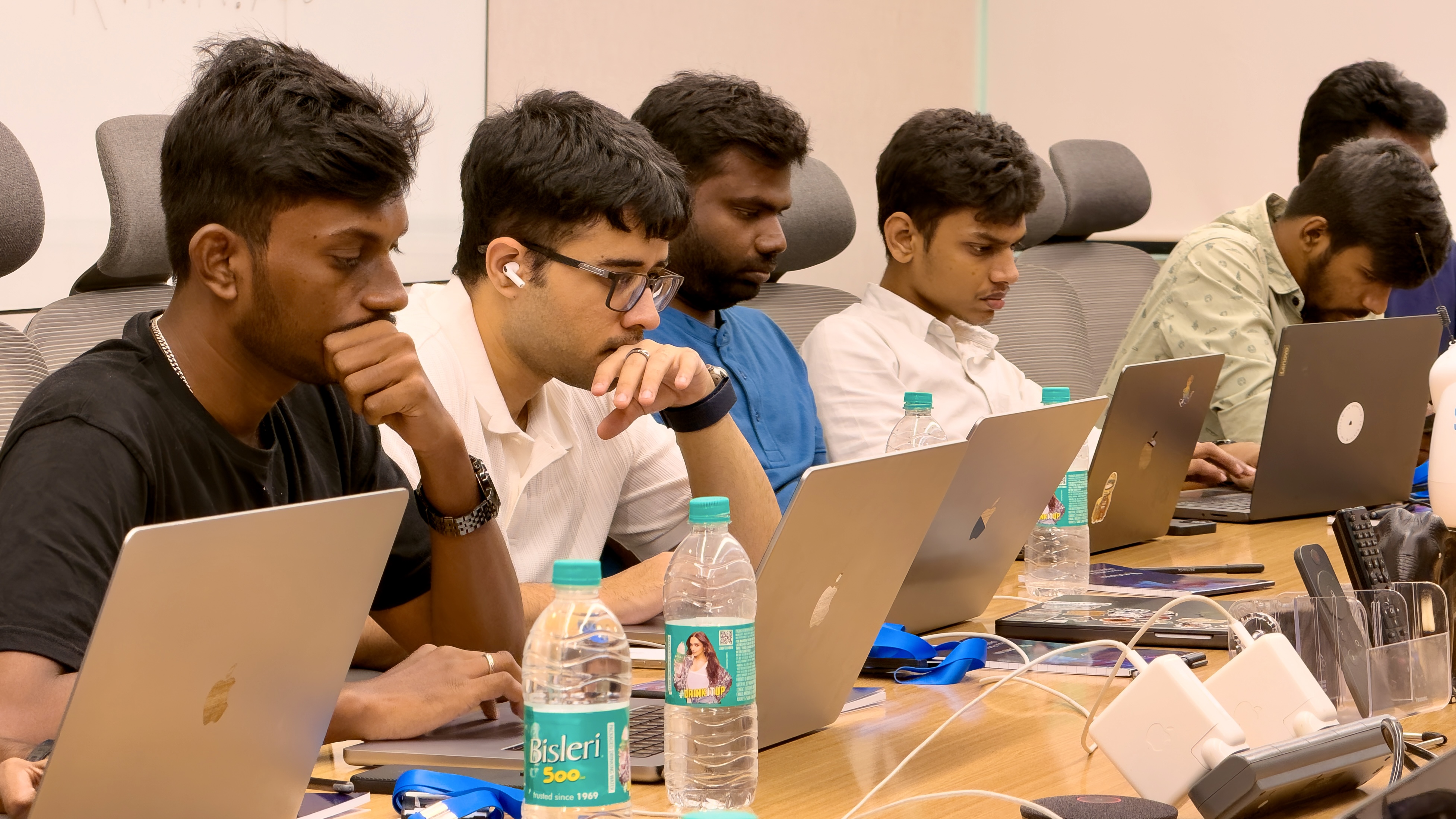
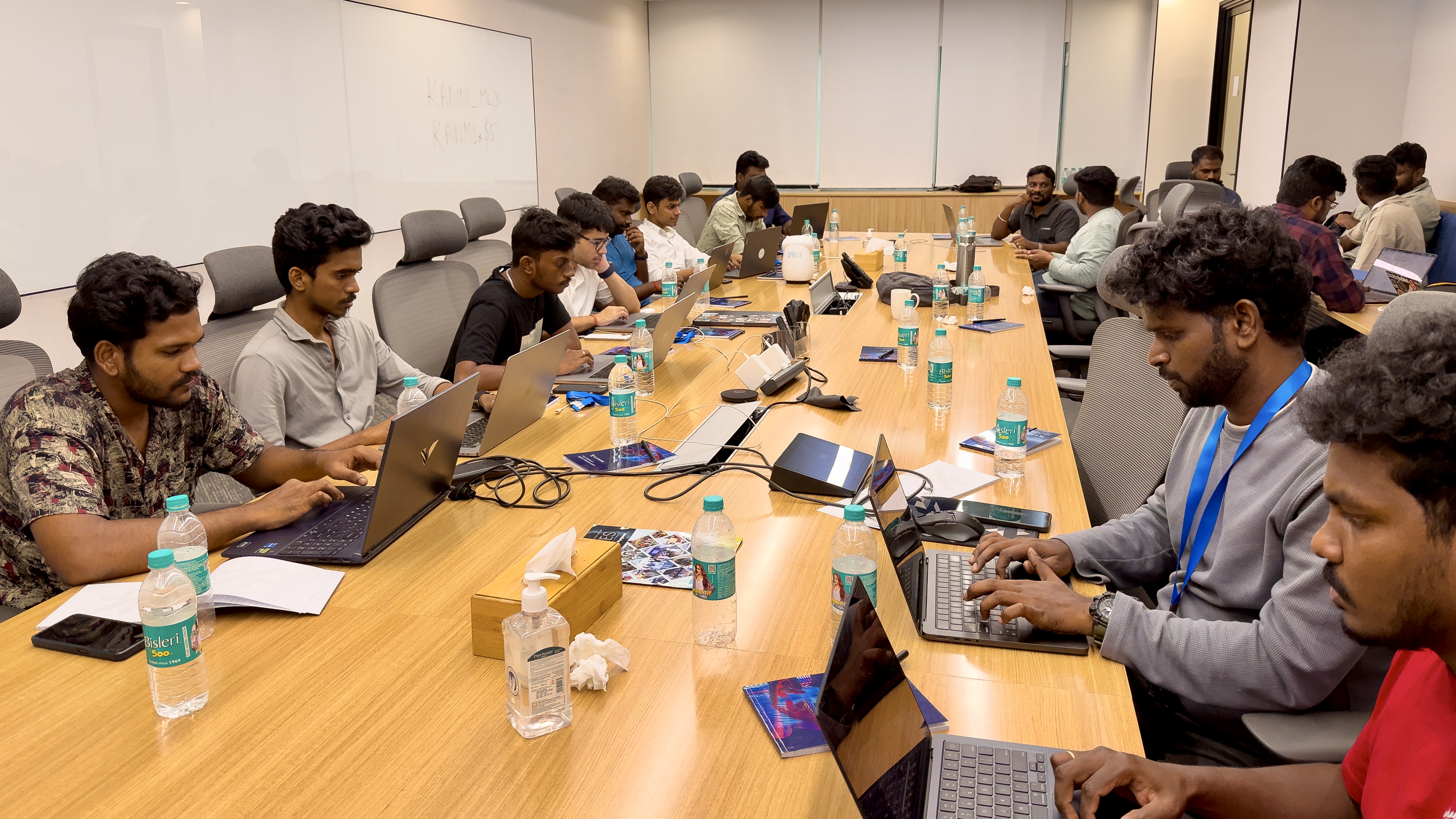
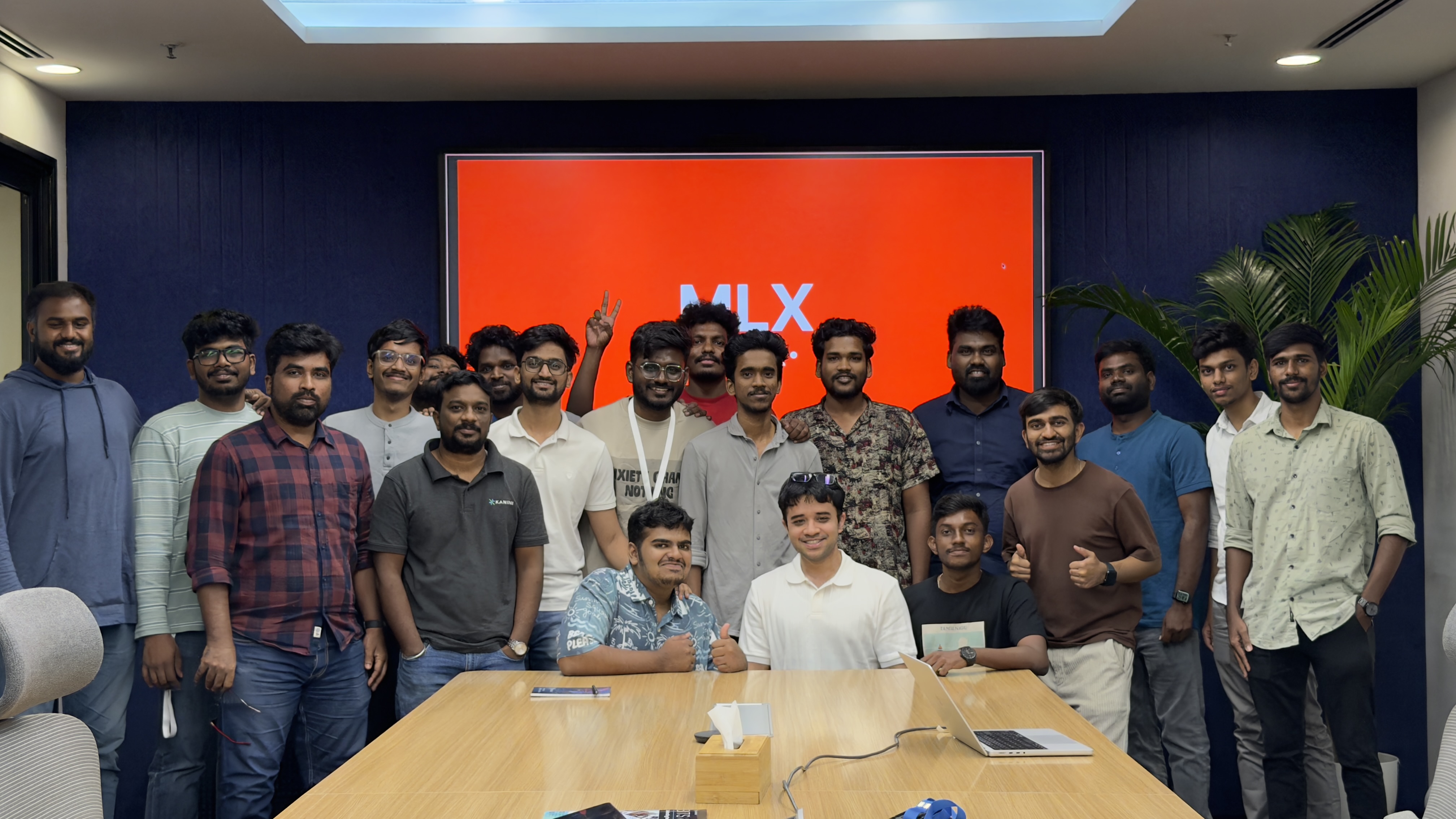
Chennai delivered some of the most exciting demos around applied AI. Builders showcased Physical AI projects, including a robot capable of reacting to and interacting with its surroundings in real time.
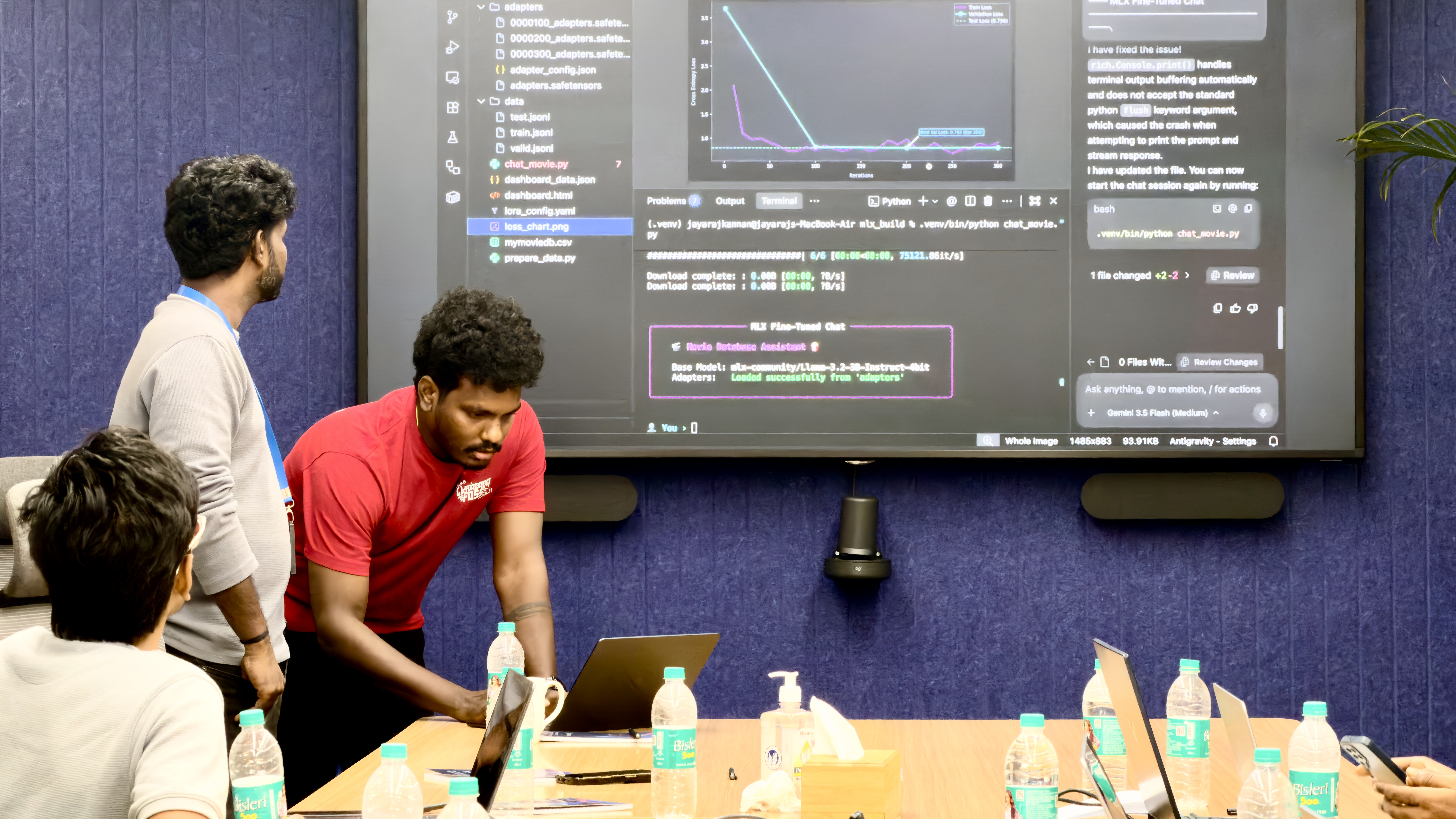
We also met founders and engineers building foundation-model-powered applications for finance, while another team fine-tuned a model on the Netflix dataset to create highly personalized entertainment recommendations.
| Builder | Demo |
|---|---|
| Rishub | DFlash router in MLX |
| Anish | Design mockups using MLX (OpenPencil) |
| Jayaraj, Rajesh | LoRA on Netflix catalog — recommendations |
| Kirubakaran | Repo security audit using MLX |
| Swapnanil | Foundation Models + MLX on iOS app (PFM) |
| Team Spritle | Story app with MLX |
Hyderabad
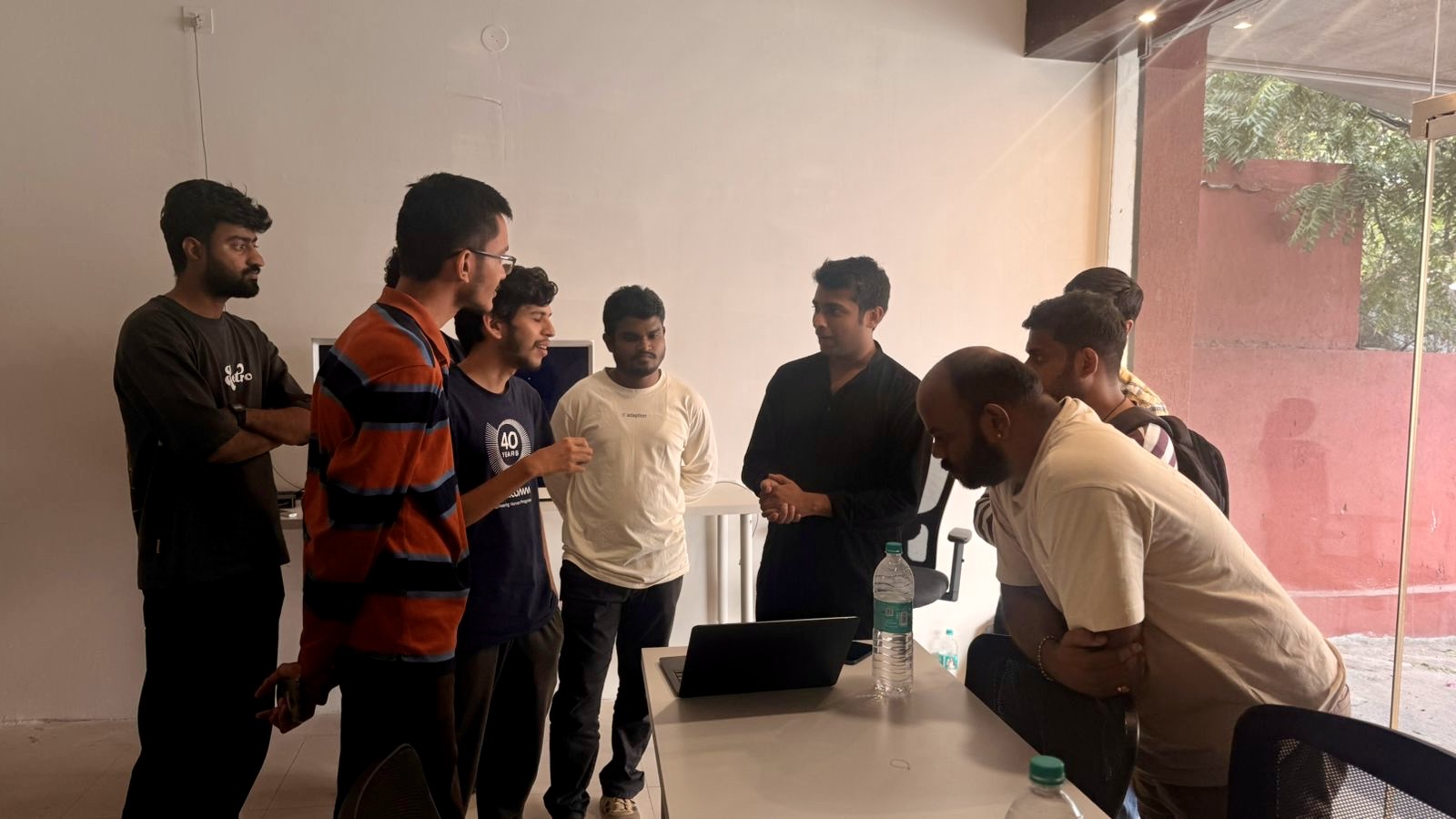
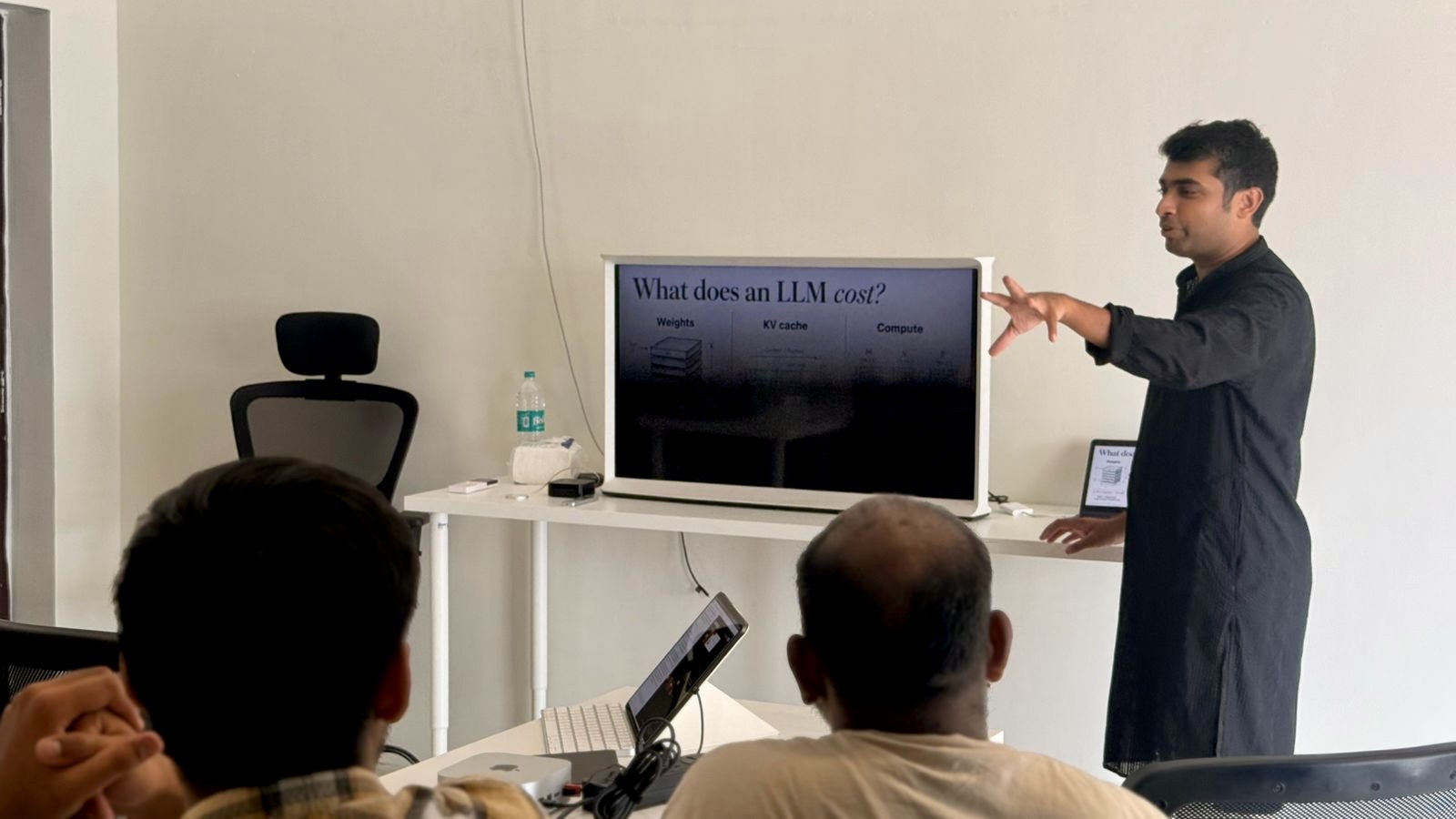
Hyderabad was one of the most special, as it was entirely community-led by a volunteer. The projects were equally exciting, ranging from innovative widgets to systems for sharing model weights across mesh networks.
| Builder | Demo |
|---|---|
| Arjun | Stello — knowledge organiser |
| Meet, Dixit | UI agent running locally |
| Salman | Safety |
| Ayush | Widget generation |
| Mrunal | Sharing model weights on a mesh |
| Shahir | A local tool-calling model on an iPhone 12 mini |
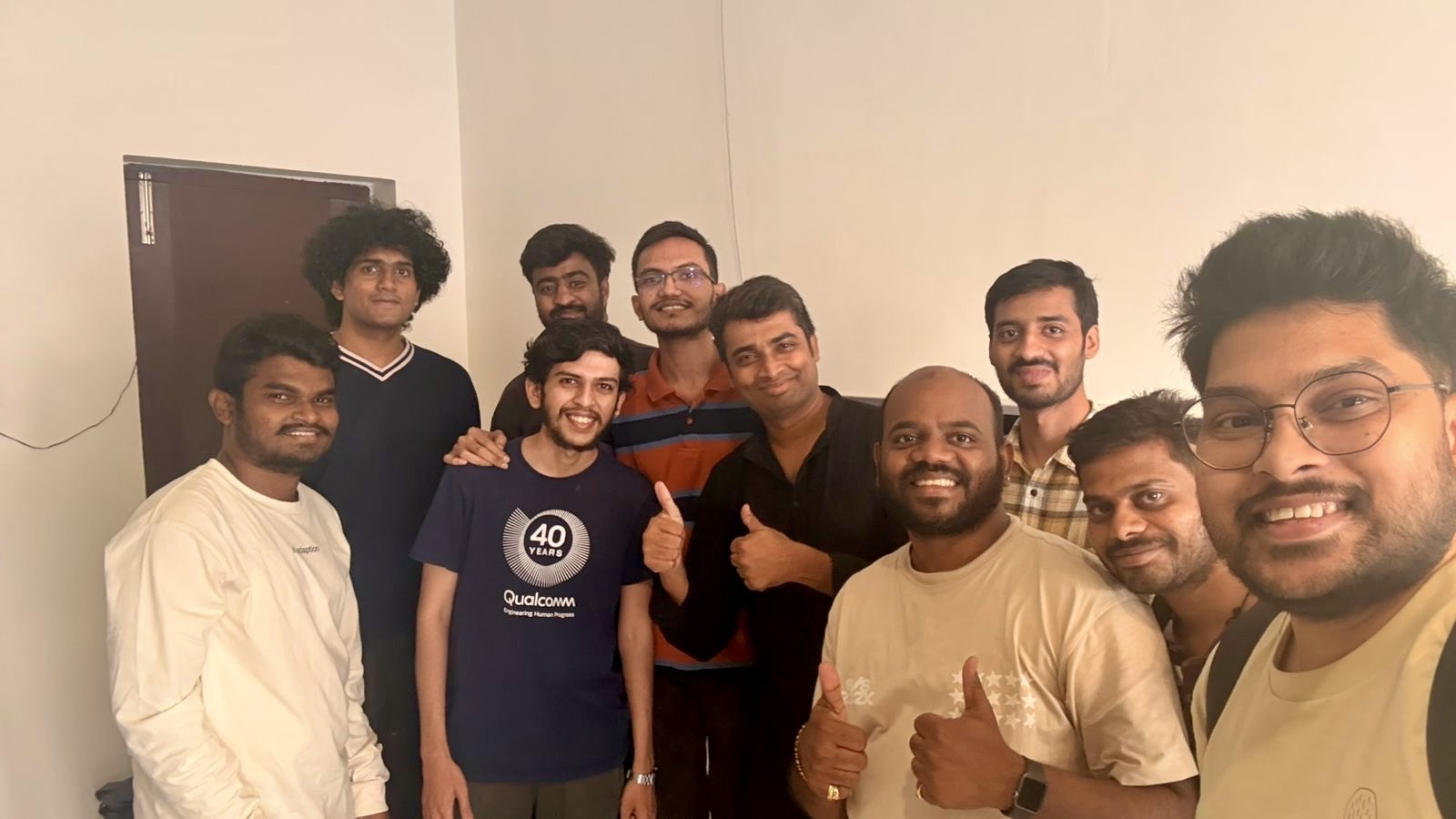
MLX India now has 700+ builders strong and growing, with meetups running across the country. If you believe AI should run on hardware you own, join the MLX India community and come build local with us and help shape a slice of the future.